February 17, 2014 by Theo Jung
Some of my writing has been made available online through the Freidoks server at Freiburg University.
- Zeitgeist im langen 18. Jahrhundert. Dimensionen eines umstrittenen Begriffs, in: Achim Landwehr (Hg.), Frühe Neue Zeiten. Zeitwissen zwischen Reformation und Revolution (= Mainzer Historische Kulturwissenschaften, Bd. 11), Bielefeld 2012, 319-355.
- Gegenaufklärung. Ein Begriff zwischen Aufklärung und Gegenwart, in: Dietmar J. Wetzel (Hg.), Perspektiven der Aufklärung. Zwischen Mythos und Realität (= Laboratorium Aufklärung, Bd. 12), München 2012, 87–100.
- Das Neue der Neuzeit ist ihre Zeit. Reinhart Kosellecks Theorie der Verzeitlichung und ihre Kritiker, in: Moderne. Kulturwissenschaftliches Jahrbuch 6 (2010/2011) 172–184 .
Posted in Publications | Tagged Counter-Enlightenment, Eighteenth Century, Enlightenment, Historical Semantics, Nineteenth Century, Publication, Reinhart Koselleck, Temporalization, Time, Zeitgeist | Leave a Comment »
February 10, 2014 by Theo Jung
On December 2nd, I will present a lecture within the framework of a series titled “New Research in History”.
In this series, which is directed specifically at highschool teachers and students aspiring to become teachers, fifteen historians from Freiburg University present the current ‘state of the art’ in their respective fields of expertise. They ask which current developments in the academic historical discipline are such that they deserve incorporation into the history curricula at the highschool level. How has our understanding of history changed and how may this be reflected in history teaching?
My lecture will be concerned with the origins of modernity in the so-called ‘Sattelzeit’ era. Its title is:
Anfang der Moderne. Die ‚Sattelzeit‘ (ca. 1750-1850) in atlantischer Perspektive
(The Onset of Modernity. The ‘Sattelzeit’ (ca. 1750-1850) in Atlantic Perspective)
For more information, click here.
For the series’ program, click here.
Addition (February 10, 2014)
The powerpoint file of this presentation has been made available through the website and may be found here.
Posted in Teaching | Tagged Modernity, Presentation, Reinhart Koselleck, Sattelzeit, Teaching, Temporalization, Time | Leave a Comment »
January 2, 2014 by Theo Jung
In the new year, I will be presenting my research in various contexts.
On January 16, I will present my current research project (Habilitation) in the research colloquium of Prof. Dr. Paul Nolte at the Freie Universität Berlin. The title of my presentation will be:
Politisches Schweigen: Sprachspiele an den Grenzen politischer Kommunikation, ca. 1815–1920.
(Political Silence: Language Games on the Edges of Political Communication, ca. 1815-1920).
One week later, on the 24th and 25th of January, I will participate in a workshop titled Kulturkritik zwischen Frankreich und Deutschland (1860-1933): Schreibweisen zwischen Wissenschaft und Dichtung organized by Prof. Dr. Barbara Beßlich, PD Dr. Olivier Agard and Prof. Dr. Gérard Raulet at Heidelberg University. My presentation (to be held on Friday, January 24 at 10:15) will be titled:
Eine ‘Klage, die so alt ist, als die Geschichte’? Kulturkritik um 1800 und 1900 im diachronen Vergleich.
(A ‘Complaint, as Old as History Itself’? Kulturkritik Around 1800 and 1900 Compared).
Finally, I will participate in a conference titled Die Geschichtlichkeit kollektiver Vorstellungen: Historische Semantik und Soziologie, to be held in Lüneburg from 13 to 15 February, organized by the section Sociology of Culture of the German Society for Sociology. My paper (to be held on Saturday at 11:45) is titled:
Beschleunigung: theoretische und empirische Perspektiven auf eine Kategorie der Moderne.
(Acceleration: Theoretical and Empirical Perspectives on a Category of Modernity).
Posted in Presentation | Tagged Acceleration, Berlin, Beschleunigung, Communication, Cultural Criticism, Heidelberg, History, Kulturkritik, Lüneburg, Presentation, Silence | 2 Comments »
September 25, 2013 by Theo Jung
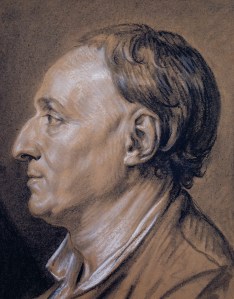
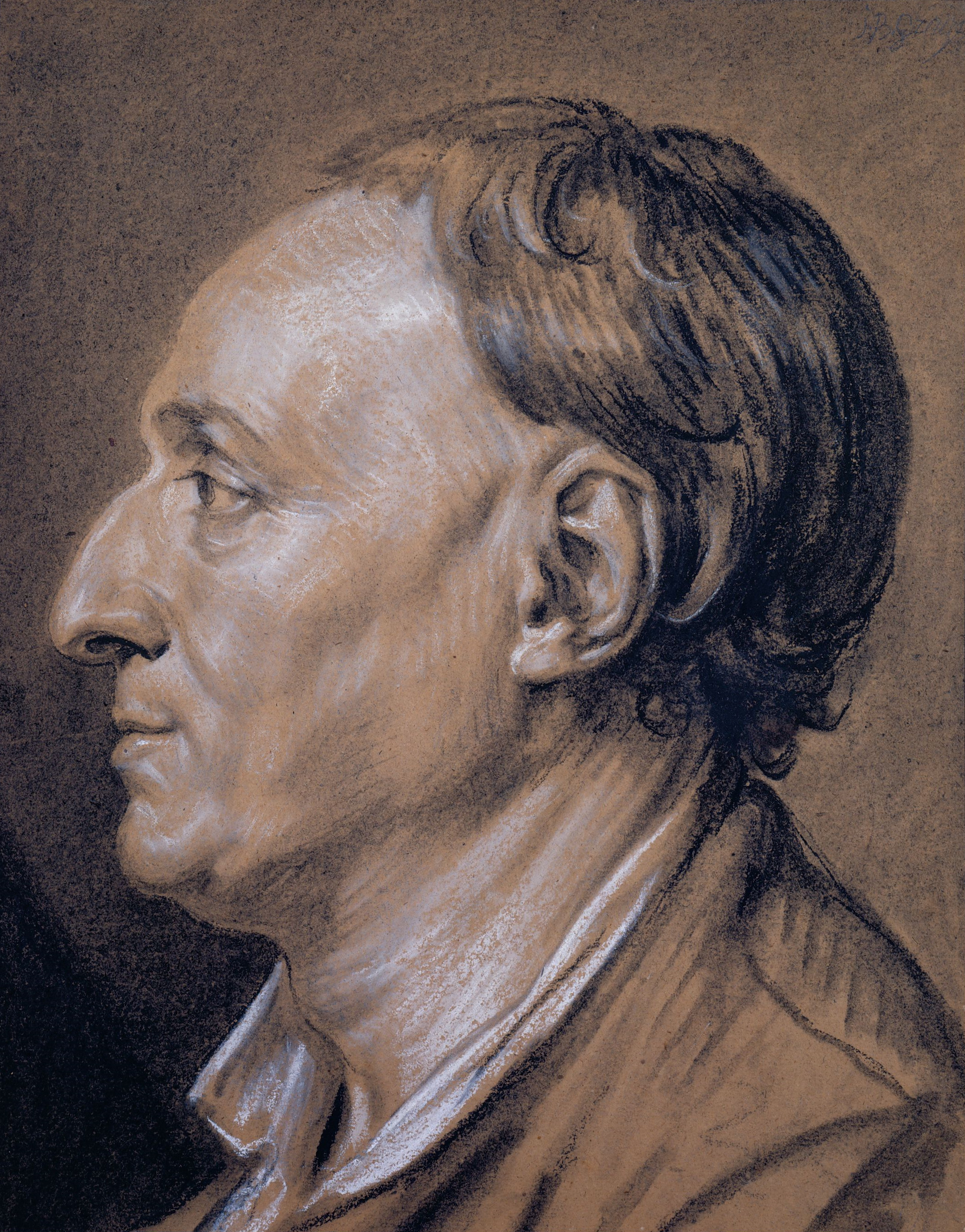
On October 5th, it will be 300 years ago that the French philosopher, writer, encyclopedia editor and brilliant conversationalist Denis Diderot (1713-1784) was born in a small town in north-eastern France. To commemorate this, Dr. Isabelle Deflers of Freiburg University and the Center of French Studies have organised a public symposium which will take place on October 28th. It’s title is:
Diderot und die Macht / Diderot et le pouvoir
Focussing on Diderot’s thought on power (and his quarrels with it), an interdisciplinary group of specialists will present various aspects of his work and influence. I have been asked to address Diderot’s intellectual confrontation with Tahiti, which he famously discussed in his Supplément au Voyage de Bougainville, a text written in the early 1770s but unpublished until well after his death. The focus of my presentation will be on Diderot’s views on sexual morals and their relevance to his political thought. The title of my presentation is:
Diderot und Tahiti: Europa im Spiegel einer außereuropäischen Gesellschaft
(Diderot and Tahiti: Europe Mirrored in a Non-European Society)
Admission to the symposium, which will take place in the historical Haus zur lieben Hand in Freiburg from 10:00 to 18:15, is free and open to all.
For the program, click here.
Posted in Conference, Presentation | Tagged Conference, Diderot, Eighteenth Century, Gender, Politics, Presentation, Tahiti, Travel | 1 Comment »
September 5, 2013 by Theo Jung
At a workshop at the ZiF in Bielefeld, I will be presenting a paper on the use of the concept of zeitgeist in early nineteenth century political discourse, titled:
The Politics of Time: Zeitgeist in Early Nineteenth-Century Political Discourse.
The workshop, titled “Zeitgeist: an Inquiry into the Media of Time-Specific Cultural Patterns”, takes place from 19 to 21 September, 2013. For the programm, click here. For the workshop’s concept, click here.
Posted in Conference, Presentation | Tagged Conference, Nineteenth Century, Politics, Presentation, Time, Zeitgeist | Leave a Comment »
July 4, 2013 by Theo Jung
A short article I wrote about luxury debates at the end of the eighteenth century has been published in the Zeitschrift für Kulturphilosophie.
Luxus und Sozialordnung. Kulturelle Selbstbestimmung und die Grenzen des Konsums am Ende des 18. Jahrhunderts, in: Zeitschrift für Kulturphilosophie 7, Nr. 1 (2013), S. 199-203.
In essence, the article provides a commentary on and contextualization of a text published in 1776 by Lorenz Hübner (1751-1807) titled Abhandlung von dem Luxus, oder schädlichem Prachte, which is also reprinted in the Zeitschrift. Hübners text – originally a speech in honor of the bavarian elector Maximilian III. Joseph – provides an interesting insight into the history and development of eighteenth century luxury debates. 
Posted in Publications | Tagged Article, Eighteenth Century, Lorenz Hübner, Luxury, Publication | Leave a Comment »
June 6, 2013 by Theo Jung
Last May, I finished the first section (Modul “Lehren und Lernen I”) of the program of advanced vocational training at the Freiburg center for academic teaching.

Besides two two-day workshops on teaching skills (“Fit für die Lehre”), the program included four individual consultation sessions (Praxisberatung), a reciprocal visitation (Lehrhospitation) with a colleague (recorded on video) as well as a written didactic reflection. This is the first of three stages that (may) ultimately lead to the Baden-Württemberg certificate for academic teaching.
Posted in Teaching | Tagged Teaching | Leave a Comment »
May 24, 2013 by Theo Jung
On the 8th of June, I will be presenting an ‘introductory lecture’ on problems of periodization within the framework of the student-organized conference
“Einschnitt – Einbruch – Einheit? Nachdenken über Zäsuren und Epochen”
(“Incision – Incursion – Unity? Thinking about Caesuras and Epochs”)
held at Freiburg University.
Taking the history of periodization as well as its current ‘state of the art’ within the humanities as my point of departure, I will try to give an overview over the major questions and controversies currently under discussion in this field.
For more information on this conference, please refer to the official website or the facebook page.

Posted in Conference | Tagged Freiburg, History, Periodization, Presentation | Leave a Comment »
May 24, 2013 by Theo Jung
On May 15th to 17th of next year, I will be attending a conference titled “Declines and Falls: Perspectives in European History and Historiography” organized at the Central European University in Budapest.
My presentation – which draws upon my dissertation research – will address the complex interrelations between the concepts of progress and decadence in the long eighteenth century. Often, these two concepts are understood as mutually exclusive counter-concepts, epitomizing a forward-looking ‘Enlightenment theory of progress’ on the one hand and the backward and ultimately futile ‘complaints’ of conservatives and reactionaries on the other.
A closer look at the semantic structure of debates about the development of civilization in the eighteenth and early nineteenth centuries reveals, however, that to contemporaries, these concepts were not usually counter-concepts at all. Rather, they were regularly understood as linked, or even interdependent. To understand this paradox, my paper addresses the various ways in which ‘the culture/civilization as a whole’ was conceptualized in these discourses.
Joining the analysis of the semantic structure of contemporary narratives of cultural decline with their pragmatic interpretation as speech acts in public interaction, I identify three different types of interpretation of the ‘whole’ in which ostensibly monistic claims about civilization in toto were linked to a differentiated understanding of its plural nature. In this way, the common view of narratives of progress and decadence as mutually exclusive discourses – at worst resulting in a general narrative of modern intellectual history as an eternal struggle between Enlightenment and Counter-Enlightenment – may make way for a more detailed understanding of the complexities of the debates about the character and development of civilization that have been so very important to public discourses of self-reflection in the modern age.
Update: a conference report has been published on the CEU website.
Posted in Conference, Presentation | Tagged Civilization, Concept, Conference, Counter-Enlightenment, Culture, Decadence, Eighteenth Century, Enlightenment, Historical Semantics, History, Linkedin, Presentation | Leave a Comment »
« Newer Posts - Older Posts »


 Theo Jung