Feeds:
Posts
Comments

On November 29th, I am invited to present my research project on the history of cultures of oral communication in the Research Colloquium of the ‘Research Center for Social and Economic History’ at Zürich University.

Venue:

18.15 – 19.45
Rämistrasse 64
8001 Zürich

For more information, click here. The colloquium’s complete program may be found here.

An article I wrote about the concept of the ‘spirit of the age’ in the long Eighteenth Century has been published in the volume Frühe Neue Zeiten, edited by Prof. Dr. Achim Landwehr.

Zeitgeist im langen 18. Jahrhundert. Dimensionen eines umstrittenen Begriffs, in: Achim Landwehr (Hg.): Frühe Neue Zeiten. Zeitwissen zwischen Reformation und Revolution (= Mainzer Historische Kulturwissenschaften 11), Bielefeld: transcript 2012, S. 319–355.

In my article, I trace the meanings and usages of the concept of zeitgeist in its various forms (esprit du siècle, Geist der Zeit, spirit of the age, etc.) across a number of contexts in France, England and the German lands. The concept is shown to be at the center of the temporalization of discourses about contemporary culture and its historical development during the Eighteenth Century. A special focus of the article lies on the complicated relation between the unstressed usages of the concept on the one hand and the explicit, metalinguistic discussion about it on the other. Because of its controversial and elusive nature, the concept of the spirit of the age was at the center of heated debates about its cognitive and metaphysical legitimacy and its pragmatic usefulness. How did such debates influence its use in other contexts?
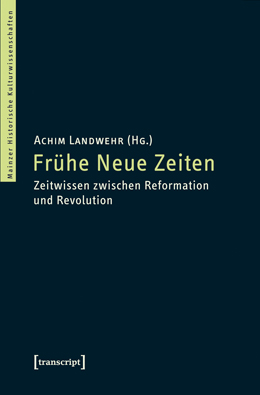
To read the Achim Landwehr’s introduction to the volume, click here.

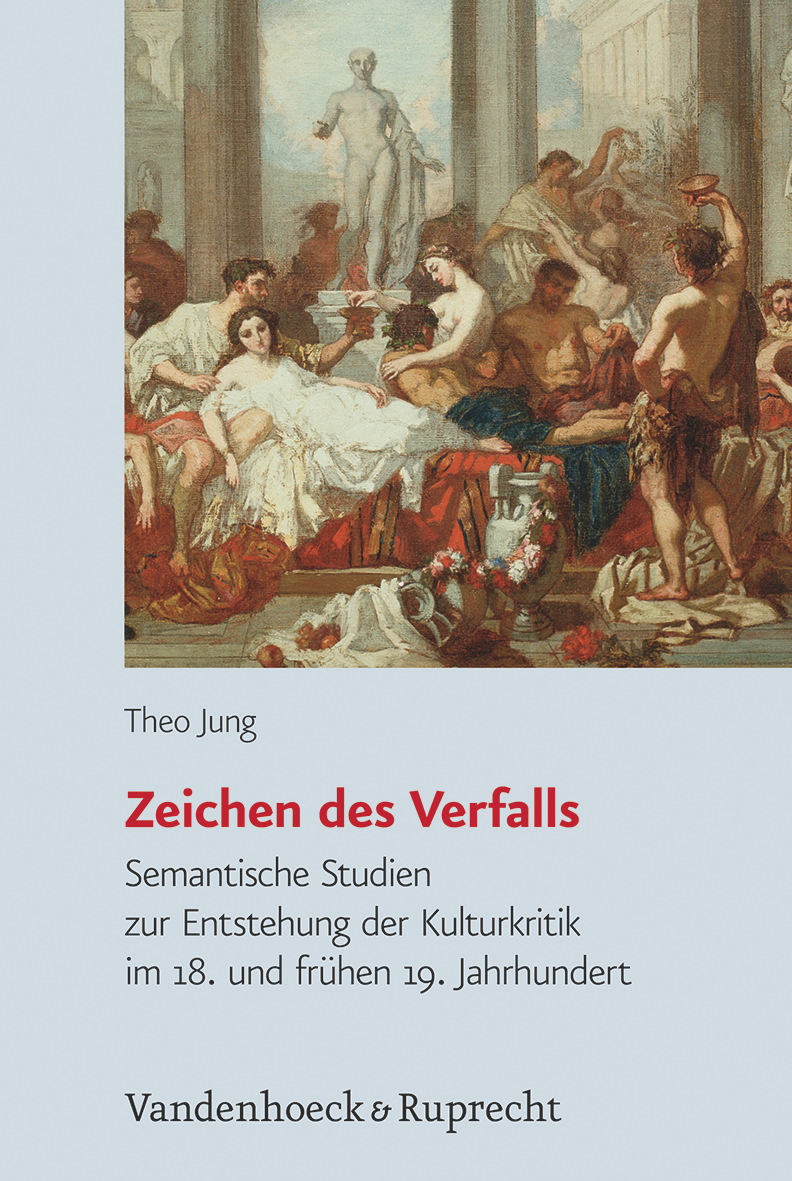
My dissertation has been published as volume 18 of the series ‘Historische Semantik‘ by Vandenhoeck and Ruprecht.

For more information, click here. For ordering from within Germany, click here.

As usual, this winter semester I’ll be teaching two courses:

Power and Morals: Britain in the Victorian Age

and

Bourdieu for Historians

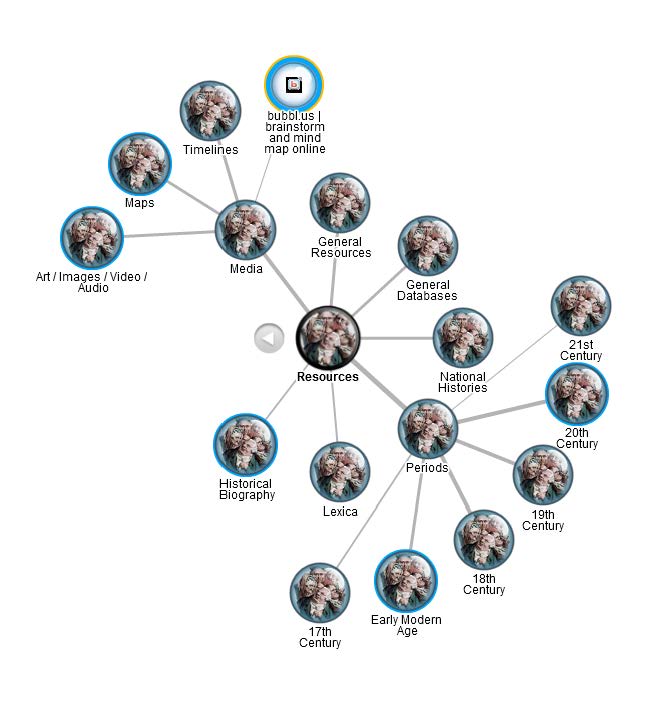
Pearltree

Using the pearltrees web environment, I’ve started a systematic collection of links to websites of historical interest. Primarily, I aim to use these links as a teaching tool, providing useful background information to my various courses. Beyond this, I hope to provide students (and other people interested in various historical topics) with an accessible gateway into the digital side of historical research. The collection is dynamic and built to – using the input of colleagues and students – grow and ‘branch out’ over time.

It may be found here

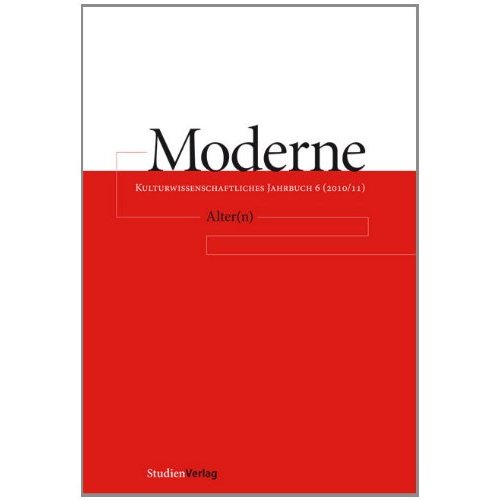
After a long publishing process, an article I wrote in 2010 has now been published in Moderne: Kulturwissenschaftliches Jahrbuch. In it, I survey the analytical strengths and weaknesses of Reinhart Koselleck’s theorem of temporalization for empirical research in the humanities. Considering it’s origins in modernization theory and giving it’s various critics due attention, I argue that the concept – in an updated, more pluralized form – may still be fruitfully applied in historiographical research.

The volume may be purchased here.

Last week, I presented a paper at the conference ‘The Changing Experience of Time in the Long Nineteenth Century: Local, Regional, (Trans)National and Global Perspectives‘, held at the Centre for Transnational History of the University of St. Andrews (Scotland). My presentation was concerned with different models of historical analysis of the changing experiences and practices of time, especially with the so-called model of ‘temporalization’ which has been primarily championed by the German historian Reinhart Koselleck. Its title was:

Modern Times: Temporalization as a Concept of Historical Analysis

Also, I’m happy to announce that next month, I’m presenting other research at a conference ‘Populäre Geschichte und medialer Wandel zwischen Fortschrittsoptimismus und Kulturpessimismus‘, organized by the DFG-research group ‘Historische Lebenswelten in populären Wissenskulturen der Gegenwart‘ (DFG-FOR 875). This time, my topic will be a narrative of cultural interpretation that was quite influential at the end of the 18th century, which interpreted history as a slow evolution from a ‘poetic’ to a ‘prosaic’ mode of existence. The title of my presentation will be:

Vom poetischen Ursprung zur prosaischen Gegenwart: ein kulturanalytisches Geschichtsnarrativ im späten 18. Jahrhundert
(From poetic origin to prosaic present: a historical narrative of cultural analysis at the end of the 18th century)

I’m honoured to announce that after the Fazit-Stiftung, now the Geschwister Boehringer Ingelheim Stiftung für Geisteswissenschaften has also generously awarded me a grant towards the printing costs of my dissertation, to be published this year under the title “Zeichen des Verfalls. Semantische Studien zur Entstehung der Kulturkritik im 18. und frühen 19. Jahrhundert”.

Grant FAZIT-Stiftung

I’m happy and grateful to announce that the FAZIT-Stiftung has awarded me a generous grant towards  the printing costs of my dissertation (to be published this fall).

My courses for the summer semester 2012 are:

Political Assassinations in the long 19th Century (from Jean Paul Marat to Franz Ferdinand)
Even today, political assassinations are by no means rare. Time and again, individuals or groups decide to use targeted violence as a means to attack or even end a political order that is – in their eyes – unjust. Most often, the key factor in their choice of target is not just his or her political function, but especially their symbolic significance as the representative of a certain political system. The reaction to such events has always been highly controversial, such that at times, the assassins themselves (Charlotte Corday, Carl Ludwig Sand, John Wilkes Booth, Gavrilo Princip) subsequently became as famous as their victims. Taking our starting point from a number of European and American case studies, this course traces the history of the phenomenon of political assassinations in the ‘long’ 19th century. Beyond the individual histories of single (successful or unsuccessful) attempts, its focus will lie on the attempt to identify long-term developments and trends. In addition to the assassin’s methods, motives and goals, we will discuss the multifarious dimensions of impact and reaction in politics, the justice system, the media and the culture as a whole.

The Bielefeld School of Social History: History and Significance of a Historiographical Program
It is without doubt that the so-called ‘Bielefeld School’ of social history marks one of the decisive turning point in the history of (Western) German historiography in the 20th Century. In the 70s, a group of historians around Hans-Ulrich Wehler and Jürgen Kocka, voiced an opposition to the Historicism then dominant in the historical field. Instead of the traditional history of political events, their focus was on the theory based interpretation of long-term structural developments, a full fledge ‘history of society’. Even if this program of historiographical innovation was controversial from the start, it has unmistakably had a profound influence on historiographical writing in Germany and beyond. For all that, however, from the 80s onwards, the paradigm of social history, came under criticism – especially from the perspective of new varieties of so-called ‘cultural history’. Since then, new models of historiography – from discourse analysis to the history of everyday life, from gender history to the plurality of ‘turns’ – seem to have displaced social history as the discipline’s dominant paradigm. And yet, in recent years, many have argued for the integration of cultural and social history. Against this background, this course aims on the basis of several programmatic texts to trace the history of the Bielefeld School and its critics. In a second step, we will discuss the significance of the Bielefeld program for historiography in the present.