August 28, 2015 by Theo Jung
Next week, I will be presenting a paper at an academic workshop organized by Juri Auderset, Andreas Behr, Philipp Müller and Aline Steinbrecher at the University of Fribourg (CH). The workshop’s topic is “Zeiterfahrung. Untersuchungen über Beschleunigung und Entschleunigung von Geschichte” (Temporal Experience: Studies on Acceleration and Deceleration in History). It’s ultimate goal is to prepare a special issue of the journal Traverse: Zeitschrift für Geschichte in 2016.
The topic of my paper is the variety of discourses of acceleration in nineteenth century germany. Considering the influential views of accelleration formulated by Hartmut Rosa and Reinhart Koselleck in terms of attempts at a general temporal theory of modernization, the paper points to the method of Historical Semantics as a way to more fruitfully consider the plurality of experiences and discourses of temporality in this period. Instead of searching for a single, specific temporality of the modern era, the paper argues for a differentiated view of the pluriform ways in which contemporaries experienced the temporal nature of their own present.
See here for the call for fapers and here for the workshop’s program.
Posted in Conference, Presentation | Tagged Acceleration, Conference, Discourse, Fribourg, Germany, Historical Semantics, Nineteenth Century, Temporalization, Time, Traverse, Workshop | Leave a Comment »
May 22, 2015 by Theo Jung
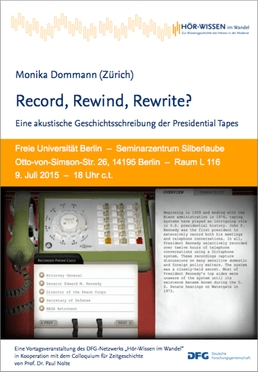
On 9 and 10 July, I will be participating in a workshop in Berlin, organized by the DFG research network Auditory Knowledge in Transition. The workshop’s title is “Auditory Knowledge in Politics: The Sound of Power and the Power of Sounds”.
A keynote lecture by professor Monika Dommann of Zürich University with the title “Record, Rewind, Rewrite? Eine akustische Geschichtsschreibung der Presidential Tapes” will be held on Thursday July 9th, at 6 PM at the Seminarzentrum Silberlaube Otto-von-Simson-Straße 26 (Raum L 116). All are welcome.
I myself will comment upon a paper presented by my friend Daniel Morat of the Free University of Berlin.
Posted in Conference | Tagged Auditory Knowledge, Berlin, DFG, History, Politics, Sound, Workshop | Leave a Comment »
May 14, 2015 by Theo Jung
Last week (May 7-8), I participated in an international conference titled “Parlamentarismuskritik und Antiparlamentarismus in Europa” [Criticism of Parliamentarism and Anti-Parliamentarism], organized by the German Kommission für Geschichte des Parlamentarismus and EuParl.net, a European research network on the history of parliaments.

Besides a keynote speech by Dr. Norbert Lammert, speaker of the German Bundestag, I had the opportunity to discuss the varieties and modes of criticism of parliament and parliamentarism with a number of renowned experts in the field. My own presentation focussed on the question to what extent antiparliamentary sentiments and discourses current in the German Empire found their way into the ‘lion’s den’, the Reichstag itself. Combining qualitative and quantitative methods of analysis, I attempted to shed some new light on a few famous cases of antiparliamentary discourse in the imperial parliament as well as on their wider relevance for its political culture and modes of communication.
The conference’s program may be found here. A publication of the proceedings is planned.

Posted in Presentation | Tagged Antiparliamentarism, Berlin, Conference, EuParl.net, KGParl, Parliament, Politics, Presentation | Leave a Comment »
March 17, 2015 by Theo Jung
Since my time in London at the German Historical Institute is slowly coming to an end, I’m starting to prepare for my teaching in the summer term in Freiburg. This time, I am offering two courses on different aspects of political history.
Politics from Below: Forms of Participation Beyond the Institutions (France and Britain, 1780-1914)
This seminar course deals with groups that remained excluded from the ‘authoritative’ political institutions (like women, workers, political fringe groups). It asks what strategies were available to them to participate in the political process nonetheless. The course also tries to determine the amount of success these different strategies could have, taking into account both the reactions of the wider public and establishment ‘countermeasures’.
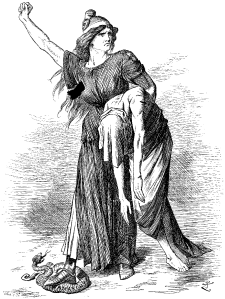
Against Mob Rule and Government by Gabble: Left- and Right-Wing Criticism of Democracy in France and Germany (1870-1933)
In this reading course, we will look into the various traditions of French and German criticism of democracy before its collapse in the twentieth century. Considering the spectrum of anti-democratic positions at the end of the nineteenth and the beginning of the twentieth century from a double comparative perspective will allow us to better evaluate the nature and context of what is often reductively interpreted as a specifically German tradition of right-wing ‘forerunners to Hitler’.
Posted in Teaching | Tagged Democracy, Nineteenth Century, Politics, Teaching | Leave a Comment »
November 4, 2014 by Theo Jung
Taking a short break from my research in the London archives and the British Library and the many interesting workshops at the German Historical Institute, I am returning to Germany for a short visit to present my research at the
Colloquium of the Chair of Modern and Contemporary History at the Ludwig-Maximilians-University Munich (Prof. Dr. Thomas Etzemüller, substituting for Prof. Dr. Margit Szöllösi-Janze) on November 12th
as well as at a workshop of the
Arbeitskreis Geschichte und Theorie in Berlin on November 14th.
I’m looking forward to the opportunity to discuss my project in these very different contexts.
Posted in Presentation | Tagged Berlin, Munich, Presentation, Silence | Leave a Comment »
September 3, 2014 by Theo Jung
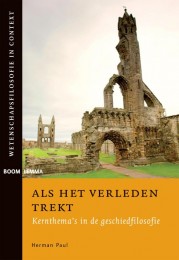
A short review I wrote about Herman Paul’s new introduction to the philosophy of history has been published on the website of the International Network for Theory of History. The book, which offers an overview over the theoretical foundations of the historical discipline to Dutch students, comes highly recommended. The review (in English) can be found here.
Posted in Publications | Tagged Als het verleden trekt, Herman Paul, History, Publication, Review, Theory of History | Leave a Comment »
July 16, 2014 by Theo Jung
An article I wrote for the Contributions to the History of Concepts has been published in volume 9, number 1 of this journal.
The article traces the uses of the concept of zeitgeist in early nineteenth-century European political discourse. To explain the concept’s explosive takeoff in the late eighteenth and early nineteenth centuries, two perspectives are combined. On the one hand, the concept is shown to be a key element in the new, “temporalized” discourses of cultural reflection emerging during this time. On the other, its pragmatic value as a linguistic tool in concrete political constellations is outlined on the basis of case studies from French, British and German political discourse. Developing this two-sided perspective, the article sheds light on an important aspect of early nineteenth-century political discourse while also pointing to some general considerations concering the relationship between semantic and pragmatic analyses of historical language use.
Posted in Publications | Tagged Article, Concept, Historical Semantics, Nineteenth Century, Temporalization, Zeitgeist | Leave a Comment »
July 3, 2014 by Theo Jung
From October 2014 to March 2015, I will be a fellow at the German Historical Institute London with a grant funded by the Max Weber Stiftung. Besides finishing the archival research for my research project about the uses of silence in nineteenth-century political communication, I will have to opportunity to start the writing process of my ‘habilitation’.

Posted in Honors | Tagged Fellowship, German Historical Institute London, Max Weber Stiftung, Silence | Leave a Comment »
April 20, 2014 by Theo Jung
In the coming summer semester, I will be teaching two courses at Freiburg University.
One seminar course, titled:
Political Arenas: Parliamentary Cultures in the Long 19th Century in Comparison
(see the official website and the pearltree with links about this theme)
And a reading course:
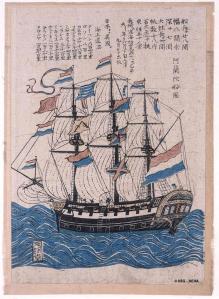
A Small European Country: Introduction to Dutch History (1581-1914)
(see the official website and the pearltree with links about this theme)
Posted in Teaching | Tagged Freiburg, Nineteenth Century, Parliament, Politics, Teaching, The Netherlands | Leave a Comment »
March 30, 2014 by Theo Jung
In March/April of this year, I will be a Karl-Ferdinand-Werner Fellow at the German Historical Institute in Paris, enabling me to do some preliminary archival research for my project on political silence in the nineteenth century. In addition, I will have the opportunity to attend several workshops organized by the institute.

Posted in Honors | Tagged Deutsches Historisches Institut, DHIP, Fellowship, Karl Ferdinand Werner | Leave a Comment »
« Newer Posts - Older Posts »


 Theo Jung