Feeds:
Posts
Comments

The digital research guide I wrote in cooperation with my colleagues Sabine Mischner, Christina Schröer, Sonja Levsen and Friedmann Pestel in 2016 and which had been updated in 2018 has now been published in another updated third edition, which also includes new contributions by Andreas Eder and Moritz Sorg.

It is part of the Clio-Guide series of introductions to digital resources in the field of historical scholarship.

The guide – which surveys institutions, online platforms, and other digital resources for historical research such as source databases and online lexica – can be accessed here.

At the network’s third workshop held in Bonn in June, the new website of the research network “HistoNet 19. Network for Historical Research on the Long 19th Century” was officially launched.

HistoNet19 is dedicated to bringing together academics working on the history of the long ninteenth century. The network’s website aims to increase the public visibility of this vibrant research field, providing a space for the presentation of current research projects and new publications as well as a platform for debate. As such, it is directed both at historians and at a broader public interested in current developments in historical research on the nineteenth century.

Announcements and information (e.g. conference announcements, calls for papers, new publications) as well as contributions such as project presentations, conference reports, reviews, etc. are very welcome at any time and can be sent (in German or English) to the network’s editor, my colleague Kay Schmücking.

We have received notice that a new interdisciplinary Research Training Group, which I had applied for with a group of colleagues of the universities of Halle-Wittenberg, Leipzig and Erfurt, will be funded by the DFG (German Research Foundation). This means that from 2025 on, PhD students, visiting scholars and other researchers will be developing a wealth of new projects on the global “Politics of Enlightenment” since the eighteenth century.

Calls for application for PhD and Post-Doc positions will follow soon.

The Politics of Enlightenment

The Research Training Group (RTG) examines the politics of the Enlightenment from the 18th to the 21st century. Its approach is twofold: firstly, it analyzes the political claims and interpretations that have been fostered by the Enlightenment or in its name, and, secondly, the political discussions and measures which determines our understanding of Enlightenment that is constantly reinterpreted according to political interests and concepts. The project thus combines the study of the historical Enlightenment—here it relates in particular to recent research which has emphasized the complexity and diversity of Enlightenment movements— with the study of its impact, appropriation, and reinterpretation up to the present day.

Apparently, ‘Enlightenment’ is once again moving to the center of political debates on, for example, the crisis of the public sphere and the disappearance of truth. The historical expansion goes along with a spatial one, as the reassessment of the Enlightenment is no longer a European phenomenon but must be considered in a global context. This spatial widening is paid tribute to by the transnational conception of the RTG and by the inclusion of a postdoctoral position that focusses on issues of Enlightenment beyond Europe. Methodologically, these historically and geographically broad perspectives on the politics of the Enlightenment allow for the fruitful integration of different approaches such as the history of ideas and concepts, social and cultural history, political science and philosophy as well as literature and cultural studies, which is reflected in the team of applicants.

The joint work is oriented towards four thematic axes, which are both central to eighteenth century politics and to current references to Enlightenment: ‘civilization’; ‘public sphere’; ‘secularity’; ‘plurality’. The doctoral students will find a lively interdisciplinary working environment, that provides them with ideal conditions for completing their work. Thanks to its location at the Interdisciplinary Centre for the Study of the European Enlightenment (IZEA) at Martin-Luther-University Halle-Wittenberg (MLU), the Research Training Group will be firmly anchored in Enlightenment research. In addition, the range of applicants’ institutional affiliations link the future doctoral students with two faculties at MLU, the Research Centre Gotha at the University of Erfurt as well as the Institute of Philosophy at the University of Leipzig.

Silence in Analogue and Digital Communication in Western Modernity. Interdisciplinary Perspectives on Its Variety and Change.

Interdisciplinary Conference, Martin Luther University of Halle-Wittenberg

Halle, Germany, 12-14 December 2024

This conference seeks to explore how changes in the conditions, means, and opportunities of communication in the Western world since 1800 have affected the perception and the evaluation of silence and concealment. Silence is understood broadly as the absence of communication where it could have been expected or relevant, and as encompassing forms of concealment. Our object of investigation is therefore not limited to synchronous oral communication, but includes a multitude of written, oral, and multimodal forms of analogue and digital communication in a broad spectrum of historical and societal contexts.

The relevance of silence as a phenomenon of communication and the changes affecting uses, function and evaluation become manifest in Western modernity in at least five ways:

First, silence is part of an evolving communicative landscape in the constitution of modern societies as literacy increases and mass media develop along with different modalities of mediated communication, digitisation and social media. In this context, increasing production of, and exposure to, communication has led both to rising expectations on communication and to disappointment when expected communication fails to occur.

Second, processes of democratisation have increased the demand for information and transparency and for the inclusive and active participation of citizens in political processes and discourse since the long 19th century. As the volume of public discourse grew and expectations of and demands on communication rose, silence came increasingly to be scandalised. Moreover, refusal to engage in communication and discourse can be criticised as forsaking one’s right of political participation. Even modern dictatorships have to acknowledge expectations of participation and develop processes of pseudo-consensual communication. In turn, refusal to engage can be seen as resistance.

Third, for people with diverse ethnic, ability, or gender backgrounds, the availability of forums for expression and resonance becomes crucial, as members of diverse groups work for inclusion and against silence in analogue and digital communication. However, the very same strategies are being used to increase the acceptance of anti-democratic, exclusionary agendas, alleging a left-liberal hegemony and accusing the mainstream media of stifling freedom of expression and restricting access to discourse for some segments of political opinion.

Fourth, together with increased opportunities of and demands on communication, hopes have risen that communication itself can help solve problems and alleviate conflict. Political dialogue and negotiations, conflict mediation and therapeutical talking cures are designed to avoid or overcome problems, while communicative reticence is seen as an obstacle to achieving this.

Fifth, since the second half of the 20th century especially, social and cultural liberalisation has brought the de-tabooisation of traumatic experience, mental health, bodily functions, gender and sexuality, illness and disability. It would be interesting to investigate how such changes are negotiated in debates about what can(not) be said and in attempts to (re)draw borders of possibility and acceptability.

Papers are invited addressing the themes sketched above (or potentially others) while looking into the uses, functions, perceptions, and evaluations of silence in analogue or digital communication with a view to historical change. Questions such as the following could be pursued:

  • What are the functions of silence in different situational, institutional, and media contexts? How do such functions change before the background of various broader processes of social change?
  • Which societal, political or other consequences arise from controversial debates about the meaning and legitimacy of silence?
  • Which cultural values are associated with silence (and with communication as its implicit counterpart) in analogue and digital communication, and with what implications?
  • In which contexts and at what times do expectations of and demands on communication raise and fall? What consequences does this have for the ways in which silence is evaluated?
  • How do opportunities of communication and silence relate to societal diversity and  inclusion and/or marginalization?

Conference languages will be German and English. Papers will last 20 minutes, followed by 10 minutes of discussion. Please submit an anonymised abstract of up to 500 words (excluding references) via email to silenceinhalle@mail.de by 30 June 2024. You will hear back from the organising committee by the end of July 2024. We are planning to publish selected contributions after the conference.

There will be no charge for registration. Support for travel and/or accommodation expenses may be available for early-career researchers without financial backup from an institution. If this applies to you, please contact us at silenceinhalle@mail.de.

Organising committee: Annamária Fábián (Bayreuth, Germany), Theo Jung (Halle, Germany), Torsten Leuschner (Ghent, Belgium), Armin Owzar (Paris, France), Melani Schroeter (Reading, UK), Igor Trost (Passau, Germany), Stefanie Ullmann (Cambridge, UK), Judith Visser (Bochum, Germany).


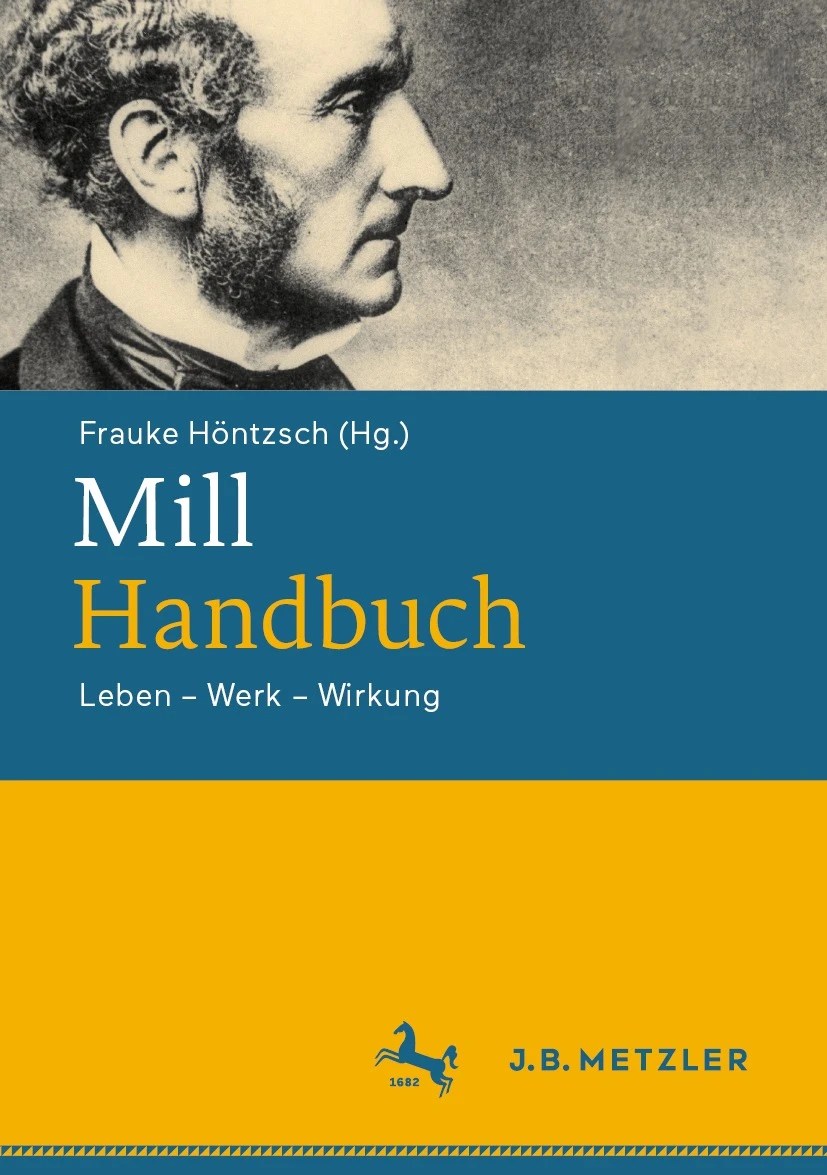
A new German-language handbook on John Stuart Mill has just been published by J.B. Metzler Verlag under the title J. St. Mill-Handbuch: Leben – Werk – Wirkung.

In it, I have written a contribution on a text that Mill published as a series of newspaper articles in 1831, titled The Spirit of the Age. By placing this essay in the context of Mill’s own intellectual development, of the contemporary political situation in Britain and France, and of current debates in Mill-scholarship, I try to provide some entry points for a better understanding of a text that is no easy read but very worthwhile.

While Mill himself was quite harsh on this early publication later in life, it encompasses some fascinating reflections on the relation between authority and freedom, on the development of civilization, and on the social role of intellectuals.

Mill’s original text is available in the Online Library of Liberty through this link. It comes highly recommended.

My chapter is available here.

Many thanks to the editor Frauke Höntzsch for the compilation of what looks to be a great research compendium on one of the most intriguing intellectual figures of the Victorian era.

In April, I will be speaking in Dresden, at the conference “Das Königreich Sachsen 1848/49 – Dynamiken und Ambivalenzen der Revolution” (April 24-26, 2024), organized by Prof. Dr. Susanne Schötz, Prof. Dr. Andreas Rutz and Werner Rellecke.

The program can be downloaded here.

All are welcome and attendance is free.

Conference abstract in German:

Sehr geehrte Damen und Herren,
 
vom 24. bis 26. April 2024 veranstalten die Professur für Wirtschafts- und Sozialgeschichte der TU Dresden, die Sächsische Landeszentrale für politische Bildung und das Institut für Sächsische Geschichte und Volkskunde eine internationale Tagung in Dresden, die sich den revolutionären Ereignissen von 1848/49 im Königreich Sachsen widmet. Niemals zuvor haben sich hier so viele Menschen für Freiheit, Recht und Einheit begeistert wie während der Revolution von 1848/49. Männer und Frauen verliehen ihrem Wunsch nach bürgerlichen Rechten, größerer sozialer Gerechtigkeit und einem vom Volk gewählten sächsischen wie nationalen Parlament auf vielfältige Weise Ausdruck. Sachsen war in dieser Zeit der am dichtesten besiedelte und industriekapitalistisch am weitesten entwickelte deutsche Mittelstaat. Hier hatte sich eine starke Demokratiebewegung entfaltet, zahlreiche Arbeitervereine entstanden und Frauenrechte wurden zum Thema. Doch wie anderswo behielten auch in Sachsen die konservativen Kräfte die Oberhand. Die Tagung spürt den Verflechtungen, Dynamiken und Ambivalenzen des Geschehens aus unterschiedlichen Perspektiven nach. Sie interessiert sich für revolutionäre Karrieren und staatliches Handeln ebenso wie für transnationale und transatlantische Aspekte sowie Formen des Erinnerns und der Revolutionsbewältigung.
 
Die Tagung findet in Präsenz in der Sächsischen Landeszentrale für politische Bildung, Schützenhofstraße 36, 01129 Dresden statt. Das vollständige Tagungsprogramm und den Link zur Anmeldung finden Sie hier: www.isgv.de/tagung1848
Die Anmeldung ist ab jetzt freigeschaltet und noch bis zum 16. April 2024 möglich.
 
Wir freuen uns auf Ihren Besuch!
 
Im Namen des Tagungsteams
 
Prof. Dr. Susanne Schötz

In 2022, I attended the workshop “Ruling the Assembly. Procedural Fairness, Popular Emotion, and the Access to Democracy (19th-20th Centuries)“, organized by Dr. Anne Heyer (Leiden), Dr. Anne Petterson (Nijmegen) and Prof. Dr. Henk te Velde (Leiden) in Amsterdam. It explored how politicians and citizens tried to resolve the tension between reasonableness and accessibility of political debate, both in and outside Western European parliaments. What did political newcomers have to do in order to be listened to? What meaning did parliamentary rules have for citizens participating in public political discussions? And above all, how did they develop norms and practices for the conduct of democratic politics?

Some of the workshop’s contributions, including my own, have now been published in a special issue of the journal Parliaments, Estates and Representation.

My own contribution is titled

In All Seriousness: Laughter in the German Reichstag, 1871-1914

It can be accessed (Open Access) free of charge here.

Abstract

The ideal of parliamentary debate is often construed in terms of a disimpassioned exchange of arguments. Yet in its actual practice, emotions play a key role. As recent studies of French, Belgian, British, and other parliaments have shown, a closer look at the uses and understandings of laughter in the plenary debates can provide a useful entry point for a better understanding of the difficult to grasp atmospheric dimension of debates. Focusing on a case that has hitherto received little attention – the early decades of the German Imperial Reichstag – this contribution considers the varying modes of parliamentary humour, laughter and ridicule and their significance in the context of rhetorical struggles and processes of political in- and exclusion. In comparative dialogue with research on other parliaments (contemporary and otherwise), it contributes to a more precise characterisation of the internal dynamics of an institution still very much in flux, both in terms of its inner structures and its position within the wider framework of imperial politics. While contemporaries made a sharp distinction between exclusionary laughter and inclusionary mirth (Heiterkeit), a closer look at the plenary interactions shows that while parliamentary laughter performed many different functions, on the whole it primarily constituted a mechanism of de-escalation. Even the sharpest wit and ridicule helped generate an atmosphere in which political conflict could be negotiated without further escalation. As such, parliamentary humour did not stand in opposition to (rational) debate, but rather played a key role in the management of difference and conflict that the parliament was created to facilitate.

For the journal French Studies, I reviewed the volume “Éloquences révolutionnaires et traditions rhétoriques (XVIIIe et XIXe siècles)” edited by Patrick Brasart, Hélène Parent and Stéphane Pujol.

The review can be found online here.

In the last few years, I’ve been in close collaboration with Professor Melani Schroeter (University of Reading), one of the foremost experts on silence and communicative norms and the author of the groundbreaking Silence and Concealment in Political Discourse (2013) which was formative for my own interest in the history of political silences.

In the past year, we have managed to gain funding from the Leverhulme Trust for a collaborative research project titled “Between Voice and Silence: Communicative Norms in Diaries 1840-1990“, which has started in October 2023, involving two more colleagues: Clara Lloyd (Reading) and Pia Schmüser (Halle).

At the same time and in some ways as a preliminary study to this longer-term project, we have also co-written an article on communicative norms in a very different setting: the British Parliament. This article has now been published in the journal Language and Communication, and can be accessed through this link.

Abstract

As a metaphor for political power, participation, and legitimacy, the concept of ‘voice’ is central to considerations of representative politics during the modern era. Little is known about how political actors themselves understood and referred to their own voices, those of others, and their respective significance for representative politics. This article focuses on the British Parliament, which was since the eighteenth century regarded as a paradigmatic incarnation of political voice and as the pinnacle of modern representative government. Based on a corpus of Hansard debates from 1800 to 2005, we analyse MPs’ explicit references to ‘voice’ in parliamentary debates. We aim to explore the salience of ‘voice’ for MPs and of different aspects of voice as a vehicle for expressing political will. We also shed light on how metadiscursive references to ‘voice’ change over the course of the nineteenth and twentieth centuries.

Schroeter, Melani / Jung, Theo: Speaking Up and Being Heard. The Changing Metadiscourse about ‘Voice’ in British Parliamentary Debates since 1800, in: Language & Communication 94 (2024), 41–55. DOI: 10.1016/j.langcom.2023.12.002.

Together with my colleagues Till Kössler and Robert Buch, I’ve organized a panel discussion on the cultural, political, social and philosophical implications of recent developments in the field of Artificial Intelligence. Under the title “Künstliche Intelligenz und das Ende des Menschen?” / “Artificial Intelligence and the End of Humanity?” we have invited

to reflect on the broader significance of this technological shift, which is too often discussed only in terms of euphoric optimism or apocalyptic worries. How does our perspective on ‘humanity’ change against the background of the increasing prevalence of self-thinking machines? The discussion brings different voices
from culture and science into conversation with one another to develop a sharper perspective on what the future co-existence of man and machine might entail.

The discussion is organized in partnership between the Landeszentrale für politische Bildung Sachsen-Anhalt and the Landesforschungsschwerpunkt Aufklärung – Religion – Wissen. Moreover, it is part of the “Transformationslabor Hochschule” which is funded by the Stifterverband der deutschen Wissenschaft e.V.

The event will take place in the neue theater Halle on January 18, 2024 from 7:30 pm. Attendance is free and all are very welcome.