Feeds:
Posts
Comments

Archive for the ‘Publications’ Category

I’m glad to announce that my article

Auftritt durch Austritt: Debattenboykotts als parlamentarische Praxis in Großbritannien und Frankreich (1797-1823)

[Performance by Means of Withdrawal: Debating Boycotts as a Parliamentary Practice in Britain and France (1797-1823)]

has been published in the 58th volume of the Archiv für Sozialgeschichte, a special issue under the title “Practising Democracy. Arenas, Processes and Ruptures of Political Participation in Western Europe during the 19th and 20th Centuries”. At a workshop held in Berlin in November 2017 (Call for Papers, Program), the preliminary drafts of the contributions were discussed and prepared for the publication now available from J. W. Dietz Verlag.

4250

My contribution asks under what circumstances the refusal to participate can itself become a mode of political practice.

Participation is often understood to be a fundamental value of democratic politics. But under some circumstances, the conditions of given opportunities to take part in political decision making processes are structured in ways that prohibit their de facto effectiveness. In such cases, political groups may choose to exit from established platforms and institutions in order to symbolically express their disapproval of the given situation.

Taking the example of oppositional groups’ parliamentary boycotts in the context of the changing systems of early parliamentarism, my contribution argues that the refusal to participate can itself be a forceful mode of democratic practice. Cases from the Irish, British and French parliaments shed light on the specific logic and political relevance of these boycotts in the historical context of the late 18th and early 19th centuries.

The volume’s introduction, written by Anja Kruke and Philipp Kufferath, may be found online here. The other contributinos are available in print.

Read Full Post »

In the Handbuch Sound edited by Daniel Morat and Hansjakob Ziemer, which is now available both as eBook and hardcover, my article on

Silence / Schweigen

provides a survey of the wide and sprawling interdisciplinary landscape of ‘silence research’ with a special focus on the subject’s political dimensions. After an overview over various approaches and empirical fields, the contribution argues for the need for a stronger analytical integration of two aspects that have hitherto mostly been considered separately: the spectrum of cultural meanings of silence on the one hand and the pragmatics of its use as a particular mode of language on the other.

9783476026040

Read Full Post »

The ‘digital research guide’ to the field of nineteenth century history my colleagues and I of the Chair of Modern Western European History at Freiburg University published in 2016 has been updated to include some new material and links.

In this text, we present a broad overview over the digital resources presently available to historians of the ‘long’ nineteenth century, ranging from search catalogues and source databases to institutional frameworks and communication platforms. It aims to ‘guide’ the student and scholar through this new field of expertise as well as provide a critical evaluation of the possibilities and pitfalls opened up by the availability of these new gateways to information and source materials.

The updated edition is available here.

In addition to this guide, a link database on digital resources for historians I curate using the platform Pearltrees is available here.

Read Full Post »

I received notice that my article

  • Le silence du peuple: The Rhetoric of Silence during the French Revolution, in: French History 31, Nr. 4 (2017), 440–469, DOI: 10.1093/fh/crx062.

published last year in the journal French History, has been awarded the French History Article Prize 2017 by the Society for the Study of French History.

I am very grateful to the editorial board panel that selected my contribution and hope that the fact that the article is being made available online free of charge (here) will help it find a larger readership.

m_cover

Read Full Post »

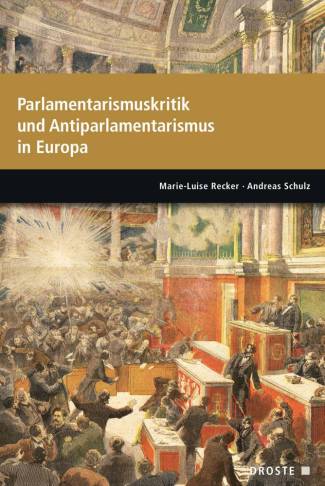
The new volume in the series Parlamente in Europa, edited by Marie-Luise Recker and Andreas Schulz, both of the German Commission for the History of Parliamentarism and Political Parties, includes a chapter I wrote:

Der Feind im eigenen Hause.
Antiparlamentarismus im Reichstag 1867-1918
(The Enemy Within: Antiparliamentarism in the Reichstag 1867-1918)

Abstract
Taking the German imperial Reichstag as a case study, the chapter studies the behavior of parliamentarians critical of the institution in which they were themselves members. Combining some famous individual cases (Wilhelm Liebknecht, Elard von Oldenburg-Januschau) with a statistical analysis of the debates’ minutes, it argues that in most cases, even the most ardent anti-parliamentarians were much more integrated into the House’s common practices and culture than their aggressive utterances would suggest.

9783770053360

Read Full Post »

The latest issue of French History includes an article I wrote on the role of silence during the French Revolution, titled

Le silence du peuple: The Rhetoric of Silence during the French Revolution

French History, 31, Issue 4 (2017), p. 440–469.

https://doi.org/10.1093/fh/crx062

Abstract

In July 1789, a phrase was introduced into French political discourse that would quickly become a standing expression: le silence du peuple est la leçon des rois. Taking this political bon mot as a starting point, the article traces the uses of and responses to collective silences during the French Revolution. It is argued that silence cannot be reduced to just the lack of ‘voice’ indicating suppression or political impotence. Rather, it must be understood as a mode of political action with a rhetoric of its own. Sketching this rhetoric not only highlights the nature and functions of a mode of political communication too often disregarded. It also shows how the controversies surrounding these silences reflected some of the major political questions of the day, playing a key role in the renegotiations of the communicative spaces of politics set off by the Revolution.

m_cover

Read Full Post »

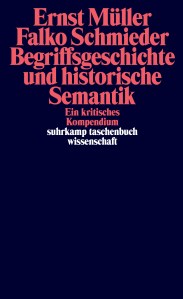
The review I wrote of

Ernst Müller and Falko Schmieder: Begriffsgeschichte und historische Semantik: ein kritisches Kompendium (Berlin: Suhrkamp, 2016), 1,027 pp.

has been published in the latest issue of Contributions to the History of Concepts.

29717

The volume comes recommended, both as an introduction into Historical Semantics and as a way for scholars in the field to make themselves familiar with other areas of this wide ranging research landscape. In addition, Müller and Schmieder offer a number of valuable new insights into the history and theory of their subject.

Read Full Post »

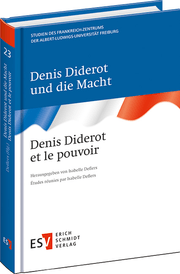
The journal Francia Recensio has published a thorough and critical review by the Augsburg early modernist Kirill Abrosimov of the volume Denis Diderot und die Macht, favourably mentioning my contribution

Stimmen der Natur: Diderot, Tahiti und der homme naturel.

The text is available for download here.

180

Read Full Post »

The journal Neue Politische Literatur just published my review of Franziska Rehlinghausstudy on the German concept of destiny from early modern times through to the First World War. It comes recommended as a detailed analysis of a concept that had crucial significance for intellectual, social and political processes during the period, but also as an exemplary use of the methods of Historical Semantics.

9783525367247

Read Full Post »

The journal Traverse: Zeitschrift für Geschichte has just published a special issue on the topic of Temporal Experiences: Acceleration and Plural Temporalities (Zeiterfahrungen: Beschleunigung und plurale Temporalitäten). The table of contents may be found here.

In it, I have published a contribution on the concept of acceleration under the title:

Beschleunigung im langen 19. Jahrhundert: Einheit und Vielfalt einer Epochenkategorie

[Acceleration in the Long 19th Century: Unity and Plurality of a Temporal Category]

978-3-905315-69-1.png

The essay starts by contrasting the influential theories of acceleration formulated by Reinhart Koselleck and Hartmut Rosa. On this basis, it argues for a new approach to the history of acceleration based in the methodical tradition of Historical Semantics.

From this point of view, the usual interpretation of acceleration as the distinguishing and dominant temporal mode of the modern era is left behind in favor of a more empirical approach. Taking German debates on the topic during the 19th century as a case study, the article shows how acceleration was not a singular phenomenon (defining the modern era) at all. Rather, it could have many different meanings according to the perspective and interests of various groups as well as the changing historical contexts. In this manner, the article argues for a differentiated focus on the ways in which ‘modern’ people interpreted their own temporality instead of the sweeping, but ultimately oversimplified identification of modernity as the ‘era of acceleration’.

Read Full Post »

« Newer Posts - Older Posts »