Feeds:
Posts
Comments

Archive for the ‘Publications’ Category

The digital research guide I wrote in cooperation with my colleagues Sabine Mischner, Christina Schröer, Sonja Levsen and Friedmann Pestel in 2016 and which had been updated in 2018 has now been published in another updated third edition, which also includes new contributions by Andreas Eder and Moritz Sorg.

It is part of the Clio-Guide series of introductions to digital resources in the field of historical scholarship.

The guide – which surveys institutions, online platforms, and other digital resources for historical research such as source databases and online lexica – can be accessed here.

Read Full Post »

At the network’s third workshop held in Bonn in June, the new website of the research network “HistoNet 19. Network for Historical Research on the Long 19th Century” was officially launched.

HistoNet19 is dedicated to bringing together academics working on the history of the long ninteenth century. The network’s website aims to increase the public visibility of this vibrant research field, providing a space for the presentation of current research projects and new publications as well as a platform for debate. As such, it is directed both at historians and at a broader public interested in current developments in historical research on the nineteenth century.

Announcements and information (e.g. conference announcements, calls for papers, new publications) as well as contributions such as project presentations, conference reports, reviews, etc. are very welcome at any time and can be sent (in German or English) to the network’s editor, my colleague Kay Schmücking.

Read Full Post »

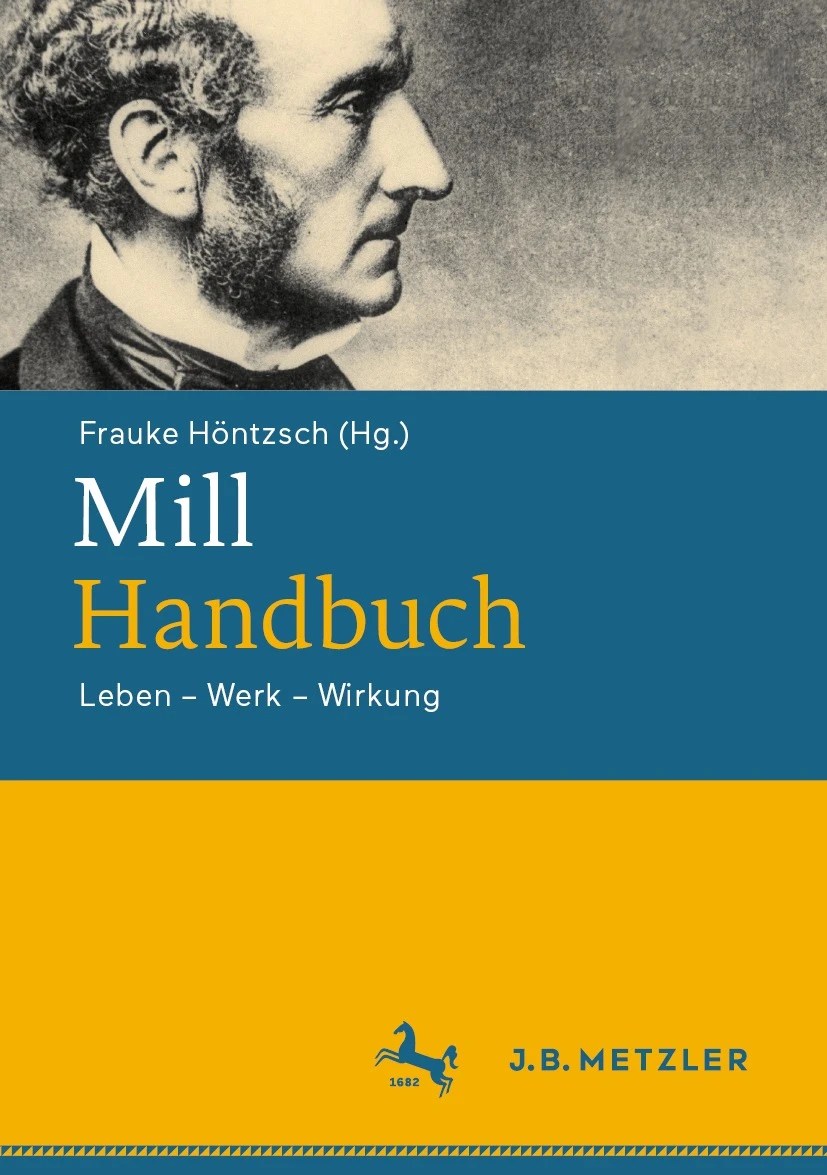
A new German-language handbook on John Stuart Mill has just been published by J.B. Metzler Verlag under the title J. St. Mill-Handbuch: Leben – Werk – Wirkung.

In it, I have written a contribution on a text that Mill published as a series of newspaper articles in 1831, titled The Spirit of the Age. By placing this essay in the context of Mill’s own intellectual development, of the contemporary political situation in Britain and France, and of current debates in Mill-scholarship, I try to provide some entry points for a better understanding of a text that is no easy read but very worthwhile.

While Mill himself was quite harsh on this early publication later in life, it encompasses some fascinating reflections on the relation between authority and freedom, on the development of civilization, and on the social role of intellectuals.

Mill’s original text is available in the Online Library of Liberty through this link. It comes highly recommended.

My chapter is available here.

Many thanks to the editor Frauke Höntzsch for the compilation of what looks to be a great research compendium on one of the most intriguing intellectual figures of the Victorian era.

Read Full Post »

In 2022, I attended the workshop “Ruling the Assembly. Procedural Fairness, Popular Emotion, and the Access to Democracy (19th-20th Centuries)“, organized by Dr. Anne Heyer (Leiden), Dr. Anne Petterson (Nijmegen) and Prof. Dr. Henk te Velde (Leiden) in Amsterdam. It explored how politicians and citizens tried to resolve the tension between reasonableness and accessibility of political debate, both in and outside Western European parliaments. What did political newcomers have to do in order to be listened to? What meaning did parliamentary rules have for citizens participating in public political discussions? And above all, how did they develop norms and practices for the conduct of democratic politics?

Some of the workshop’s contributions, including my own, have now been published in a special issue of the journal Parliaments, Estates and Representation.

My own contribution is titled

In All Seriousness: Laughter in the German Reichstag, 1871-1914

It can be accessed (Open Access) free of charge here.

Abstract

The ideal of parliamentary debate is often construed in terms of a disimpassioned exchange of arguments. Yet in its actual practice, emotions play a key role. As recent studies of French, Belgian, British, and other parliaments have shown, a closer look at the uses and understandings of laughter in the plenary debates can provide a useful entry point for a better understanding of the difficult to grasp atmospheric dimension of debates. Focusing on a case that has hitherto received little attention – the early decades of the German Imperial Reichstag – this contribution considers the varying modes of parliamentary humour, laughter and ridicule and their significance in the context of rhetorical struggles and processes of political in- and exclusion. In comparative dialogue with research on other parliaments (contemporary and otherwise), it contributes to a more precise characterisation of the internal dynamics of an institution still very much in flux, both in terms of its inner structures and its position within the wider framework of imperial politics. While contemporaries made a sharp distinction between exclusionary laughter and inclusionary mirth (Heiterkeit), a closer look at the plenary interactions shows that while parliamentary laughter performed many different functions, on the whole it primarily constituted a mechanism of de-escalation. Even the sharpest wit and ridicule helped generate an atmosphere in which political conflict could be negotiated without further escalation. As such, parliamentary humour did not stand in opposition to (rational) debate, but rather played a key role in the management of difference and conflict that the parliament was created to facilitate.

Read Full Post »

For the journal French Studies, I reviewed the volume “Éloquences révolutionnaires et traditions rhétoriques (XVIIIe et XIXe siècles)” edited by Patrick Brasart, Hélène Parent and Stéphane Pujol.

The review can be found online here.

Read Full Post »

In the last few years, I’ve been in close collaboration with Professor Melani Schroeter (University of Reading), one of the foremost experts on silence and communicative norms and the author of the groundbreaking Silence and Concealment in Political Discourse (2013) which was formative for my own interest in the history of political silences.

In the past year, we have managed to gain funding from the Leverhulme Trust for a collaborative research project titled “Between Voice and Silence: Communicative Norms in Diaries 1840-1990“, which has started in October 2023, involving two more colleagues: Clara Lloyd (Reading) and Pia Schmüser (Halle).

At the same time and in some ways as a preliminary study to this longer-term project, we have also co-written an article on communicative norms in a very different setting: the British Parliament. This article has now been published in the journal Language and Communication, and can be accessed through this link.

Abstract

As a metaphor for political power, participation, and legitimacy, the concept of ‘voice’ is central to considerations of representative politics during the modern era. Little is known about how political actors themselves understood and referred to their own voices, those of others, and their respective significance for representative politics. This article focuses on the British Parliament, which was since the eighteenth century regarded as a paradigmatic incarnation of political voice and as the pinnacle of modern representative government. Based on a corpus of Hansard debates from 1800 to 2005, we analyse MPs’ explicit references to ‘voice’ in parliamentary debates. We aim to explore the salience of ‘voice’ for MPs and of different aspects of voice as a vehicle for expressing political will. We also shed light on how metadiscursive references to ‘voice’ change over the course of the nineteenth and twentieth centuries.

Schroeter, Melani / Jung, Theo: Speaking Up and Being Heard. The Changing Metadiscourse about ‘Voice’ in British Parliamentary Debates since 1800, in: Language & Communication 94 (2024), 41–55. DOI: 10.1016/j.langcom.2023.12.002.

Read Full Post »

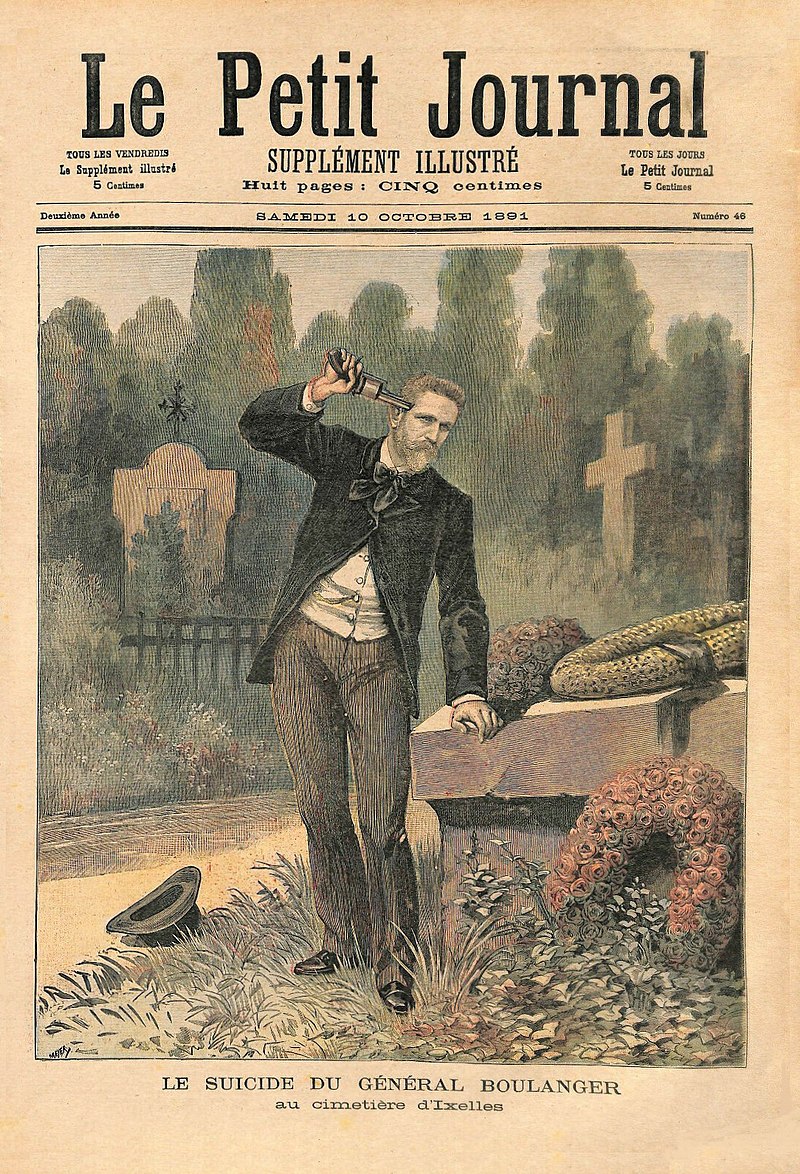
For the Jahrbuch zur Liberalismus-Forschung, I wrote an article on the Boulangist Crisis during the French Third Republic.

Building on the work of Bertrand Joly and others, I use the case to develop a fresh perspective on a particular variety of antiliberalism that became prevalent across Europe during the late nineteenth and early twentieth centuries. Framing the political issues of the time against the backdrop of a fundamental opposition between ‘words’ and ‘deeds’, a whole spectrum of political groups began to define their own position in contrast to the image of a ‘politics of mere verbiage’, encompassing a whole range of phenomena, from liberalism and parliamentarism to public discussion and the political press. The Boulangist Crisis, during which a former army general briefly came to political prominence and was generally believed to be preparing a coup against the Third Republic, exemplifies the ways in which contemporaries came to perceive the political issues and conflicts of the time through the lens of the opposition between words and deeds.

The article is available in open access and can be downloaded here.

Source: Wikimedia Commons.

Read Full Post »

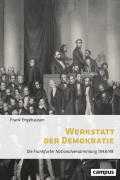
For the German historical platform H-Soz-u-Kult, I wrote a book review of “Werkstatt der Demokratie: Die Frankfurter Nationalversammlung 1848/49”. Written by Heidelberg historian Frank Engehausen, the book presents a monograph-length analysis of the first German national parliament. Besides going into the book’s many strengths, I also try to link it to wider tendencies in the historical engagement with the revolutions of 1848/49 as we are ‘celebrating’ their 175-year anniversary.

The review can be found here.

Read Full Post »

For Aus Politik und Zeitgeschichte, a journal published by the German Federal Agency for Civic Education (Bundeszentrale für politische bildung) and aimed at a wider audience, I wrote a short survey on the history of the Revolutions of 1848/49.

Fragen an 1848/49. Ein Forschungsüberblick, in: Aus Politik und Zeitgeschichte 73, Nr. 7-9 (2023), 17–23.

In it, I address the various historiographical approaches to the revolutions since its failure in 1849 and try to answer the question why debates on this theme have gone relatively quiet in recent years.

The whole issue can be read and dowloaded for free here.

Read Full Post »

For a volume edited by Wolfram Pyta and Rüdiger Voigt, I wrote a contribution addressing the intersections of gender and power during the French Second Empire.

Die Öffentlichkeit weiblicher Arkanpolitik. Kaiserin Eugénie im Zweiten Kaiserreich

[The Publicity of Female Arcane Politics: Empress Eugénie in the Second Empire]

Focusing on Empress Eugénie de Montijo, the essay considers the question of female power in the Second Empire (1851-70) from a twofold perspective. On the one hand, I gauge the actual scope of her political agency – as Napoléon III’s wife, potential future regent, and mother of the crown prince, as a public figure, and as a well-connected and willful political actor in her own right. On the other, Eugénie’s real impact is contrasted with its contemporary imagination during the Second Empire and the Third Republic, which regularly framed the Empress as a paradigmatic figure of uncontrolled and irrational female influence behind the scenes and as a prime reason for the Empire’s eventual demise.

Read Full Post »

« Newer Posts - Older Posts »