Feeds:
Posts
Comments

Posts Tagged ‘Twentieth Century’

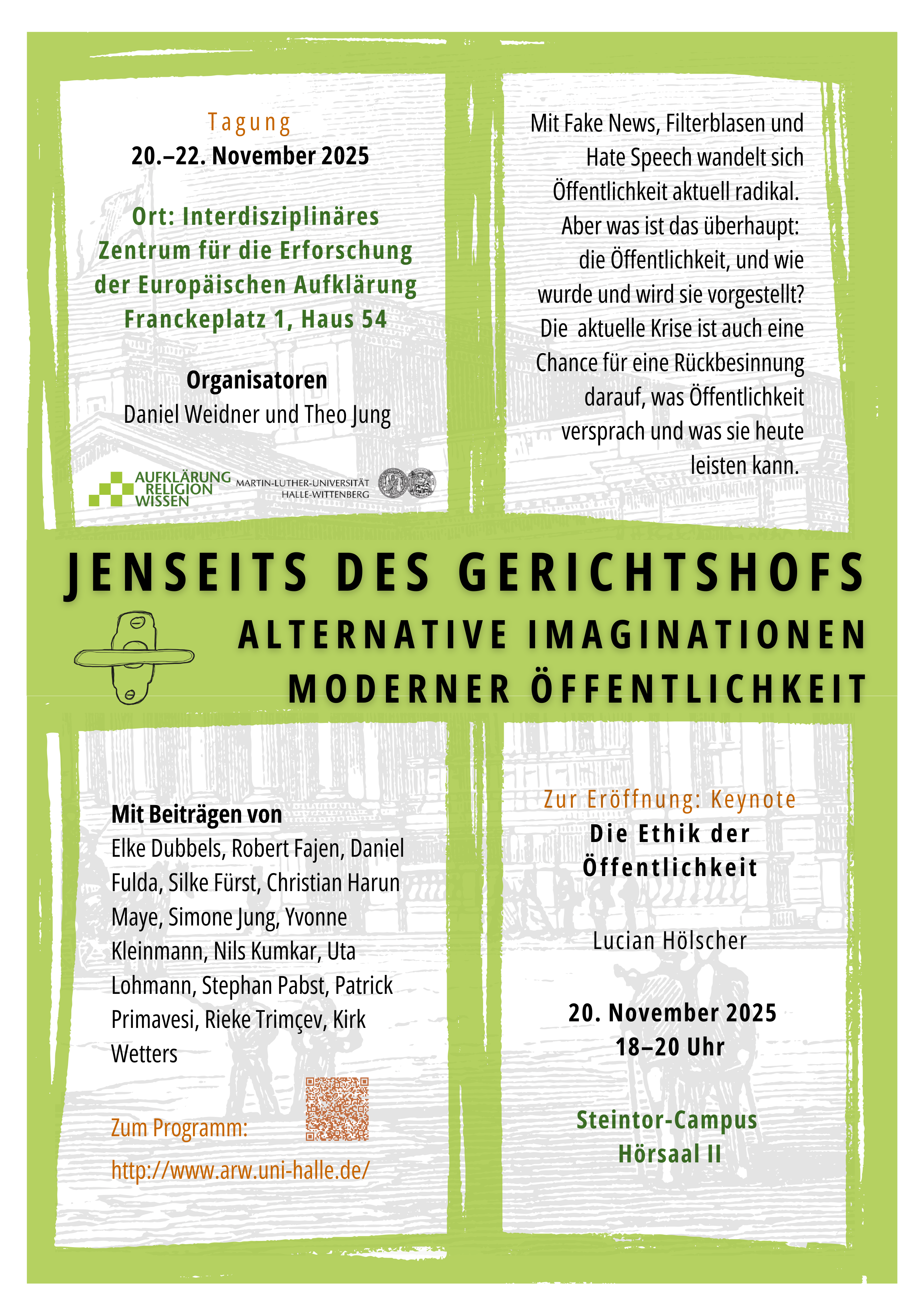
On 20 to 22 November, the yearly symposium of the Martin-Luther-University’s Research Focus “Enlightenment – Religion – Knowledge” will take place under the title

Jenseits des Gerichtshofs: Alternative Imaginationen moderner Öffentlichkeit

(Beyond the Court: Alternative Imaginations of the Modern Publich Sphere)

The symposium has been organized by my colleague Daniel Weidner and myself and will include contributions by

Lucian Hölscher (Bochum), Nils Kumkar (Bremen), Simone Jung (Lüneburg/Halle), Yvonne Kleinmann (Halle), Robert Fajen (Halle), Patrick Primavesi (Leipzig), Uta Lohmann (Hamburg), Christian Harun Maye (Basel), Elke Dubbels (Bonn), Kirk Wetters (Yale), Rieke Trimçev (Halle), Daniel Fulda (Halle), Silke Fürst (Zürich) and Stephan Pabst (Halle).

For further information on the venues and program, see here.


Abstract

In recent years, there has been renewed talk of a crisis of the public sphere. Filter bubbles and fake news, unrestrained insults and cancel culture are discussed as symptoms of decay, disintegration, or dysfunction of the publis phere – although, of course, these debates themselves take place within the public sphere itself. But what, in fact, is this “public sphere”? How de we imagine it, how do we describe it, and what conclusions do we draw from this?

The current diagnosis of crisis offers an opportunity for a critical genealogy, since the sense of crisis may itself stem, not least, from the fact that certain established imaginations of the public sphere have become fractured and questionable. Such a moment invites renewed reflection on what the public sphere was, is, and could be – and may point to traces laid down since the formative period of modern publics that have as yet not been fully pursued.

Read Full Post »

The Research Focus Group ‘Enlightenment – Religion – Knowledge‘ based at the Martin-Luther-University Halle-Wittenberg is offering a 1-year postdoctoral fellowship under the title “Kritik im Widerstreit” (criticism in contest), beginning on October 1, 2025.

The research focus group is dedicated to the historical Enlightenment and its continued legacy up to the present. This includes, not least, the concept of “criticism,” which was first emphatically formulated during the Enlightenment and is currently again the subject of intense debate—particularly with regard to its political implications.

Where does criticism stand today, what is it still capable of, and how must we rethink it? What forms of practice are associated with it, what does it mean in different fields—politics, art, the public sphere—how is it shifting under new media conditions, and what political significance does it have in each case?

Today, criticism itself is under criticism: it is said to be elitist, exhausted, and outdated, to defend particular interests, and to serve self-promotion more than its apparent cause. Particularly disturbing is the fact that critical arguments seem to be easily appropriated by their opponents: Today, prohibitions on thinking are proclaimed in the name of “freedom”; exclusions in the name of “equality”; and questionable dogmas in the name of “criticism”. What remains of criticism if one does not want to abandon it entirely but has given up belief in a “critique of critical criticism” (Marx)?

The scholarship is intended to serve as a means of investigating and discussing political figurations of criticism between appropriation and dismissal together with other scholars involved in research focus group. Applicants should propose an academic project (aimed at publishing an academic article) and, within this framework, organize and host an academic event; accompanying formats such as readings, panel discussions, exhibitions, guided tours, etc. are also conceivable and can be financed with ARW funds.

Deadline for applications is 27 June, 2025.

More information on the fellowship and application procedure can be found here.

Read Full Post »
In the context of a two-day workshop organized by my colleague Paulina Gulińska-Jurgiel and myself about methodological developments in the historical scholarship on parliaments, we present a public panel discussion (in German) titled

The Endangered Legislative? Historical and Contemporary Challenges in Dialogue

With our guests

Dr. Claudia Gatzka (Albert-Ludwigs-Universität Freiburg)

Prof. Dr. Thomas Lindenberger (Hannah-Arendt-Institut für Totalitarismusforschung / TU Dresden)

Dr. Danny Schindler (Institut für Parlamentarismusforschung)

we discuss the current state of parliamentary politics against the background of historical crises and developments.

Abstract

With every state and federal election, debates about the state of democracy are reignited. Ardent debates circle around justified fears of far-right parties entering parliaments and the associated risk of the institution being undermined or disempowered. While the legislature is often seen as the last fortress of democratic rule, it also increasingly appears as a fragile construct. But what is its real status today? What can parliaments and the people involved in them actually do against the onslaught of opposing forces? What instruments do they have at their disposal to protect themselves and democracy? Or should we look for alternative formats and ways of democratic representation that go beyond the concept of a legislative as the only legitimate representation of the people, enabling a different kind of social participation without falling into the trap of populism?

The discussion, which is open to all interested (free of charge), takes place in the university’s Aula (Löwengebäude), on June 25, 6 – 8 pm.

Read Full Post »

I’m pleased to announce that together with my colleague Pia Schmüser, I’ll be presenting at the upcoming international conference “Egodocuments from Medieval Codex to Modern Media: Narratives, Presentations, Identities“, which takes place in Vilnius from May 15–17, 2025.

Our presentation is titled:
“Diaries as Alter-Ego-Documents: Constructions of Diaries as a Personified Dialogical ‘Other’ in Late 19th and 20th Century Germany.”

Our talk is part of our broader collaborative work within the research project “Between Voice and Silence: Communicative Norms in Diaries, 1840-1990”, funded by The Leverhulme Trust as a collaboration between the University of Reading, UK, and the University of Halle Wittenberg, Germany, with support from The Great Diary Project in London and the German Diary Archive (Deutsches Tagebucharchiv) in Emmendingen.

The conference, organized by Nicolaus Copernicus University in Toruń, Vilnius University and the University of Lodz within the context of the International Egodocumental Research Group, brings together scholars from across Europe to explore the interpretive potential of ego-documents—letters, diaries, autobiographies, and more—as vital sources for understanding historical subjectivities and experiences. We’re very much looking forward to the exchange of ideas and the opportunity to connect with fellow researchers working on the many voices—spoken and unspoken—of the past.

More about the conference can be found here and here.

Read Full Post »

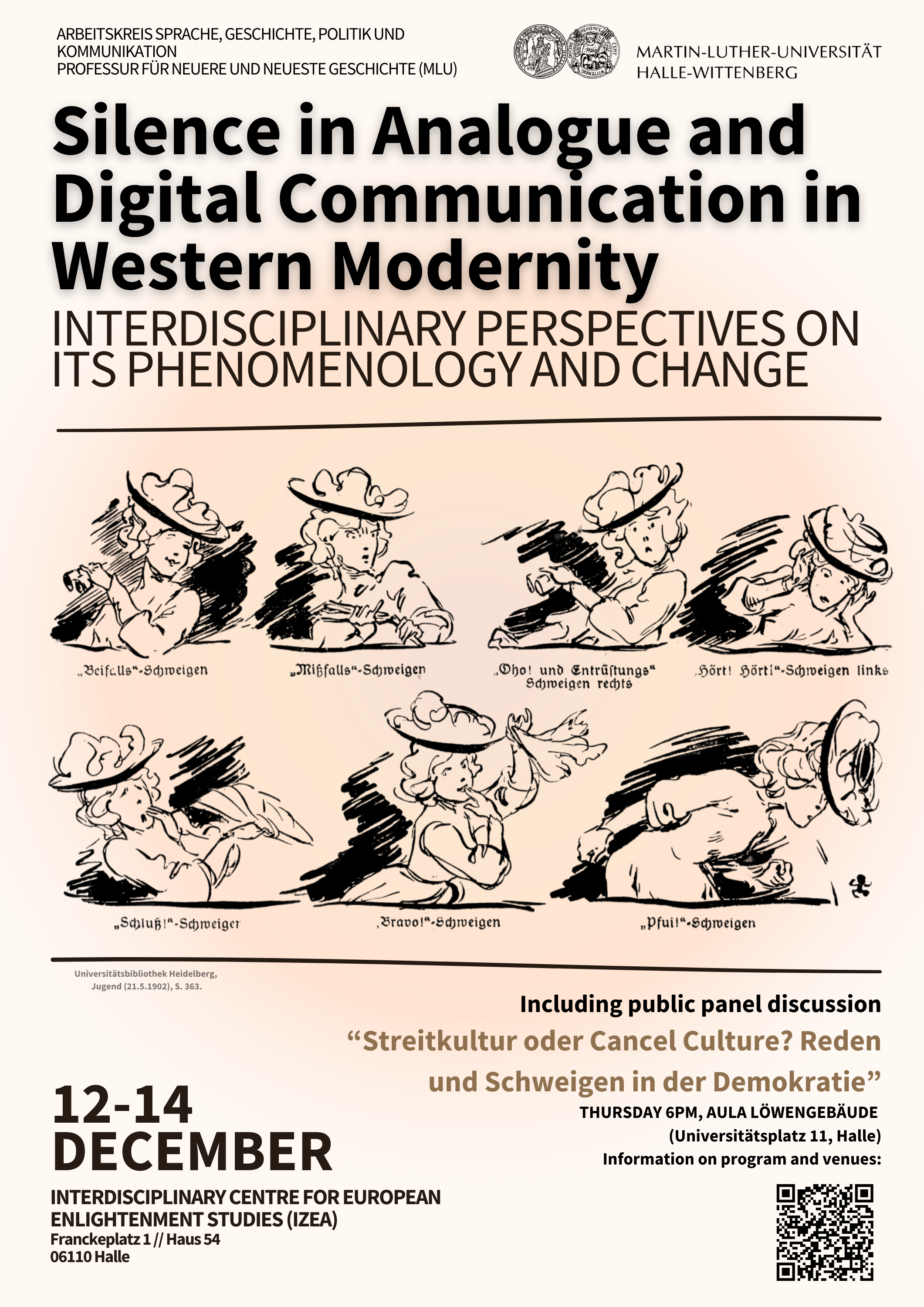
As announced earlier this year, from 12 to 14 December the University of Halle-Wittenberg will host the interdisciplinary conference Silence in Analogue and Digital Communication in Western Modernity. Interdisciplinary Perspectives on Its Variety and Change.

This event is organized by the Arbeitskreis Sprache, Geschichte, Politik und Kommunikation in cooperation with Martin-Luther-University’s Chair of Modern and Contemporary History.

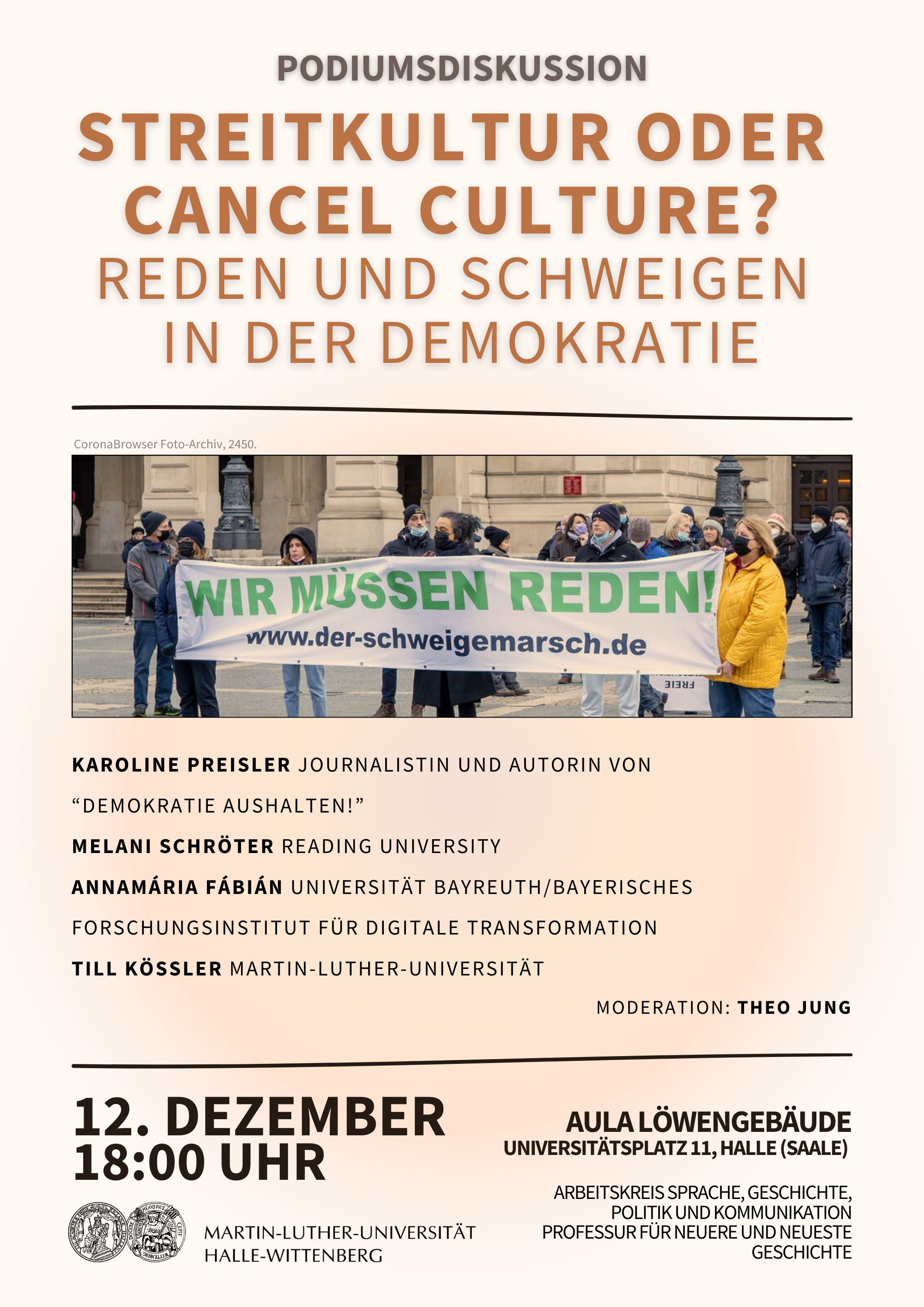
The conference begins with a panel discussion (in German) involving experts from journalism and various academic disciplines, who will tackle the many tensions between speech and silence apparent in current democratic regimes. This event is open to the public and entry is free. It takes place in the university’s main building (Löwengebäude, Universitätsplatz 11).

Many thanks in advance to Karoline Preisler, Melani Schröter, Annamária Fábián, and Till Kössler for their willingness to join in this discussion.

On Friday and Saturday, we continue with a dense program of presentations from the fields of history, literature, media studies, linguistics, memory studies and philosophy. Again, anyone is very welcome to attend one or more of the panels. Please note the different venue for Friday and Saturday: the Interdisciplinary Centre for European Enlightenment Studies, Franckeplatz 1 – Haus 54.

The organizing committee includes: Torsten Leuschner (Ghent), Judith Visser (Bochum), Annamária Fábián (Bayreuth), Armin Owzar (Paris), Melani Schroeter (Reading), Igor Trost (Passau), and myself.

Many thanks in advance to all those participating in the conference, to my co-organizers, as well as to my colleagues at the Chair of Modern History, who have made this possible.

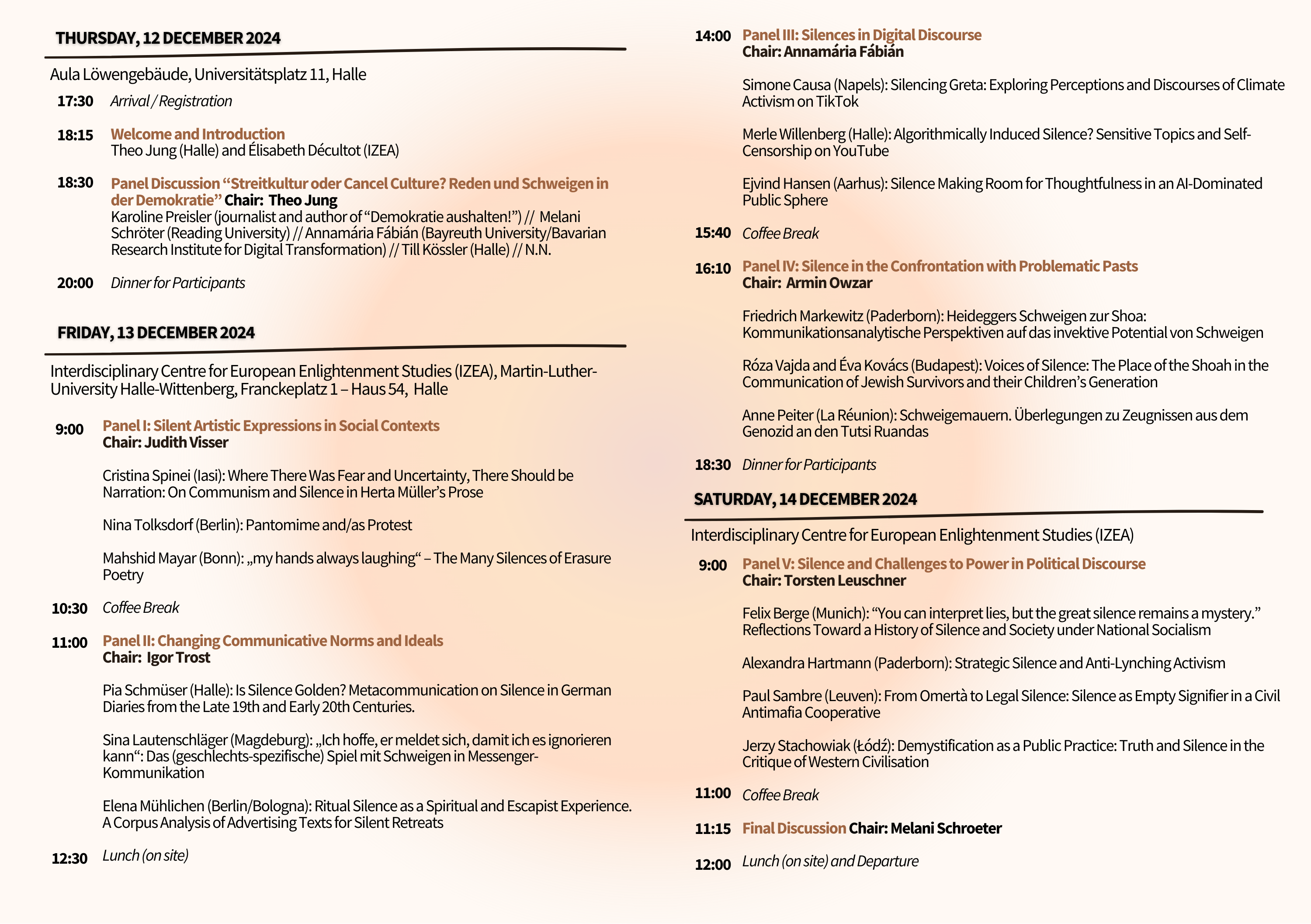
To dowload the program, click here.

Read Full Post »

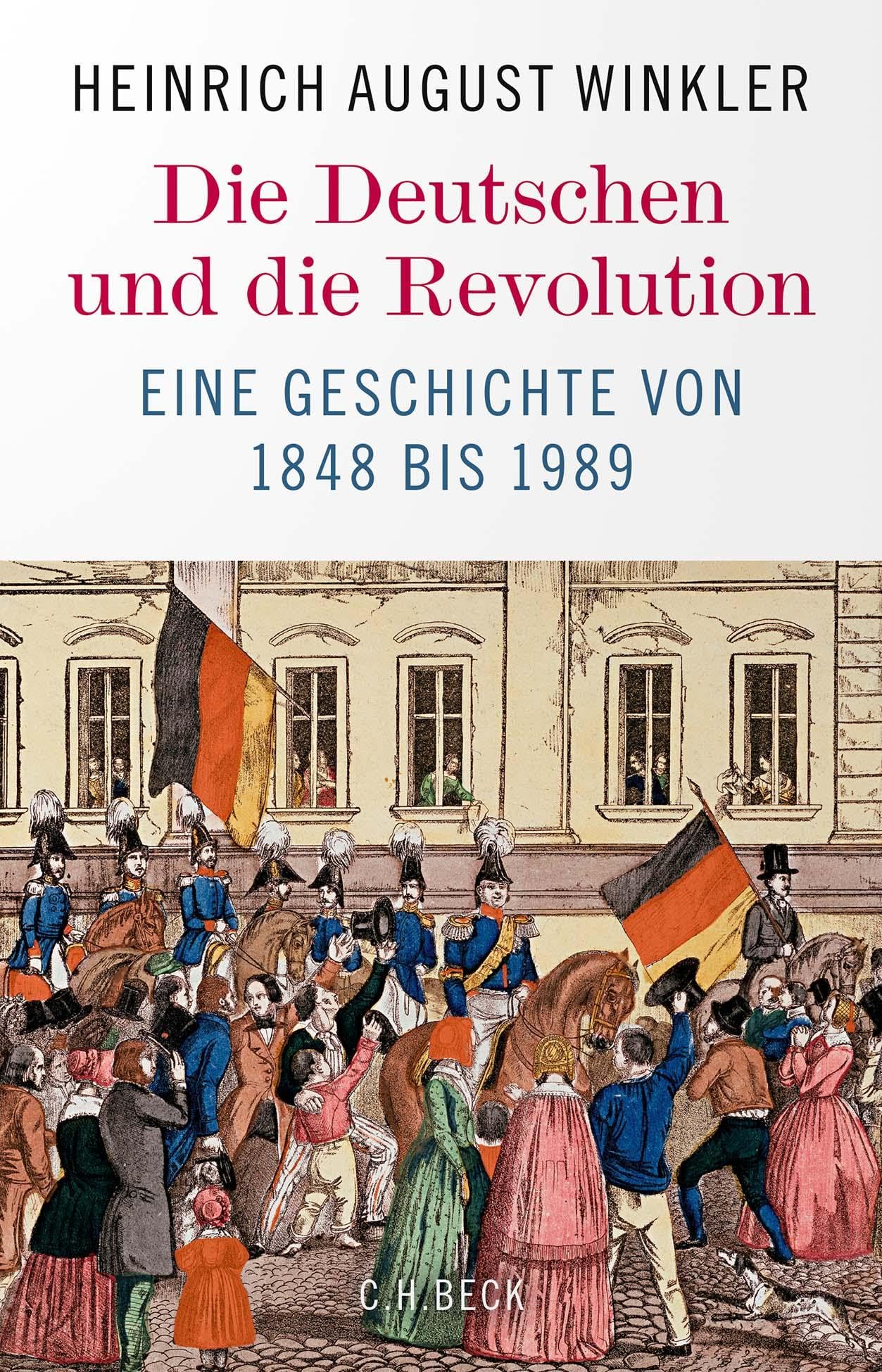
For the platform sehepunkte, I wrote a short review of Heinrich August Winkler’s “Die Deutschen und die Revolution. Eine Geschichte von 1848 bis 1989”.

The book takes a fresh look at the highly controversial, but still quite common notion that the Germans are a “people without a revolution”, a view which has been at the centre of debates about the specific nature of German history ever since the controversies over the so-called “Sonderweg thesis”.

The book comes highly recommended to all who want to delve into this topic under the able guidance of one of the most respected experts on German history there is.

The full review is available here.

Read Full Post »

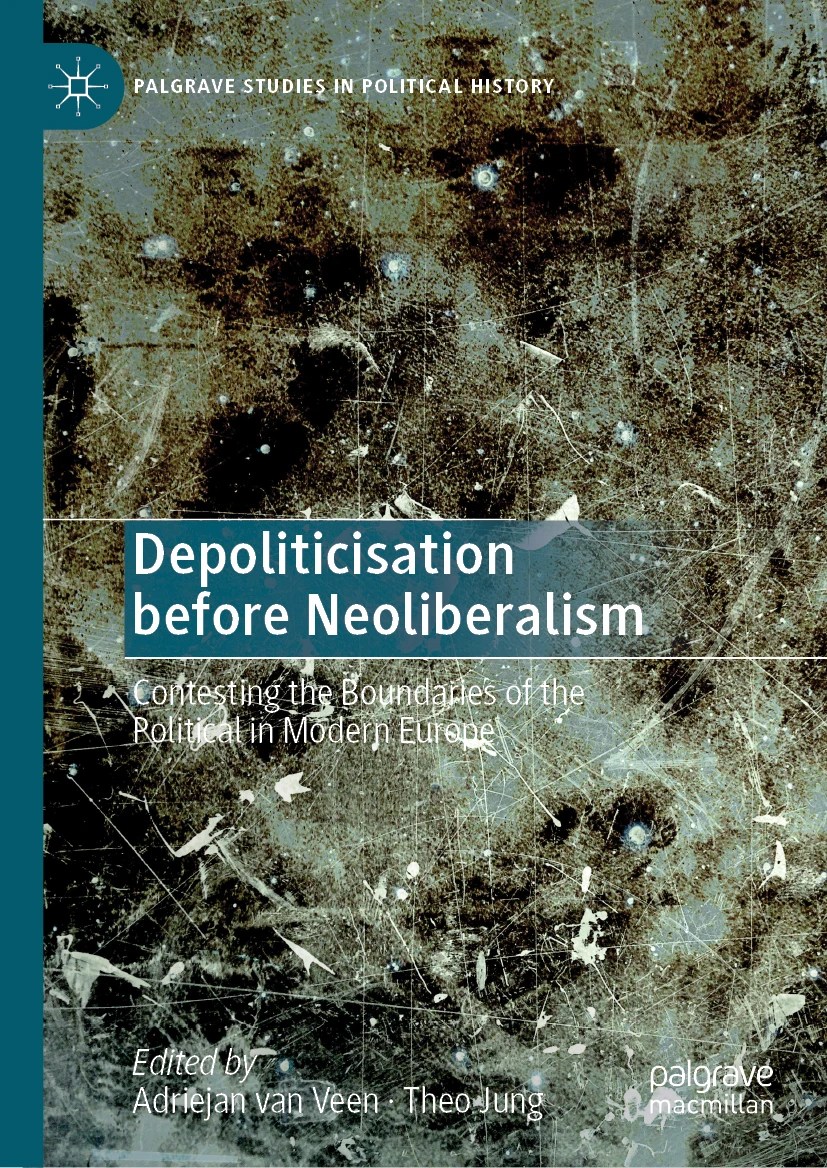
Building on a workshop organized by my colleague Adriejan van Veen and me in 2022, we have been working on an edited volume titled “Depoliticisation before Neoliberalism. Contesting the Boundaries of the Political in Modern Europe”. We were able to bring together a range of scholars from diverse national backgrounds and with different areas of expertise to study the phenomenon of depoliticisation in a long-term and european-wide perspective.

We are very happy that the volume has now been announced as part of the series Palgrave Studies in Political History.

The book’s announcement reads as follows:

This book analyses processes of depoliticisation in modern Europe from the emergence of a distinct ‘political’ sphere in the late eighteenth century until the present day. Drawing on case studies from across the continent, it demonstrates that depoliticisation has played an integral part in the contestation of modern politics since its inception. Developing a novel conceptual framework, the authors argue that depoliticisation is much more than a simple negation of politics. Rather than an anonymous and amorphous process, depoliticisation often presents an express, actor-driven effort, with modes and forms no less varied than the more familiar manifestations of politicisation. Consequently, the chapters encompass a whole range of depoliticising discursive strategies, performative practices, and institutional rearrangements, playing out across different regime types, from revolutionary orders and representative governments with limited franchises to mass democracies and totalitarian dictatorships. Illustrating how historical actors understood ‘the political’ and in which ways they intervened to renegotiate its boundaries, this book seeks to enhance our understanding of modern politics and pose questions that still resonate today. At a time when the boundaries of the political are once more heavily contested, this book offers thought-provoking insights that will appeal to scholars of history, political science, and sociology, as well as to activists and political practitioners.

Behind the scenes, my co-editor and I are still busy working out the last stages of the publishing process and it will probably still take some time until we hold the actual book in our hands, but we are very content that we are now seeing some first ‘signs of life’ and want to express our heartfelt gratitude to our contributors.

Table of contents

  • Adriejan van Veen and Theo Jung: Depoliticisation in Modern European Politics: An Introduction
  • Ido de Haan: Historicising Depoliticisation: Dimensions of the Political and Its Alternatives

    Part I: Discursive Depoliticisation: Ideas, Concepts, and Rhetoric
  • Matthijs Lok: Depoliticisation after Revolution: Moderation, Science and the State in the Nineteenth Century
  • Tamar Kojman: Between Religion and Politics: Constructing an Apolitical Sphere after the 1848–1849 German Revolutions
  • Ruben Ros: Depoliticising Democracy: Technocratic Antipolitics in Dutch Interwar Political Culture (1917–1939)
  • Stefan Scholl: Depoliticising the Economy? Semantic Struggles about ‘Politics’ and ‘the Economy’ during the Weimar Republic and National Socialism

    Part II: Doing Depoliticisation: Practices and Performances
  • Adriejan van Veen: “The Silent Citizen Became a Hero!” State, Civil Society, and the Depoliticisation of Dutch Society in the Restoration Era
  • Oriol Luján: Not Only Apathy and Disinterest: Abstention and the Blank Vote as Modes of Repoliticisation in Nineteenth-Century Europe
  • Eva Visser: Planning the Technate: The Apolitical Politics of the 1930s’ Technocratic Movement in the United States and Europe
  • Zoé Kergomard: Depoliticisation in Danger of Repoliticisation? The Ambiguities of Gaullist Get-Out-the-Vote Campaigns in the Early French Fifth Republic (1958–1969)
  • Adéla Gjuričová: Antipolitics as a Political Tool of Czech Dissent: From Earlier Roots to Its Second Life after 1989

    Part III: Institutional Depoliticisation: Delegation and Neutralisation
  • Mart Rutjes: Access Denied: The Institutional Depoliticisation of Representative Government during the Dutch Revolution, 1780–1801
  • Jan-Markus Vömel: (Un)Political Islam? Contesting the Turkish State’s Depoliticisation of Islam
  • Wim de Jong: The Police and the Political: The Problem of Depoliticisation in Dutch Municipal Policing, 1945–2002
  • Anna Catharina Hofmann: An Administered Society? Economic Planning and (De)Politicisation in the Late Franco Dictatorship
  • Koen van Zon: Eliminating Pests, Eliminating Politics? The European Community’s Regulation of Pesticides, 1958–1991

Read Full Post »

We have received notice that a new interdisciplinary Research Training Group, which I had applied for with a group of colleagues of the universities of Halle-Wittenberg, Leipzig and Erfurt, will be funded by the DFG (German Research Foundation). This means that from 2025 on, PhD students, visiting scholars and other researchers will be developing a wealth of new projects on the global “Politics of Enlightenment” since the eighteenth century.

Calls for application for PhD and Post-Doc positions will follow soon.

The Politics of Enlightenment

The Research Training Group (RTG) examines the politics of the Enlightenment from the 18th to the 21st century. Its approach is twofold: firstly, it analyzes the political claims and interpretations that have been fostered by the Enlightenment or in its name, and, secondly, the political discussions and measures which determines our understanding of Enlightenment that is constantly reinterpreted according to political interests and concepts. The project thus combines the study of the historical Enlightenment—here it relates in particular to recent research which has emphasized the complexity and diversity of Enlightenment movements— with the study of its impact, appropriation, and reinterpretation up to the present day.

Apparently, ‘Enlightenment’ is once again moving to the center of political debates on, for example, the crisis of the public sphere and the disappearance of truth. The historical expansion goes along with a spatial one, as the reassessment of the Enlightenment is no longer a European phenomenon but must be considered in a global context. This spatial widening is paid tribute to by the transnational conception of the RTG and by the inclusion of a postdoctoral position that focusses on issues of Enlightenment beyond Europe. Methodologically, these historically and geographically broad perspectives on the politics of the Enlightenment allow for the fruitful integration of different approaches such as the history of ideas and concepts, social and cultural history, political science and philosophy as well as literature and cultural studies, which is reflected in the team of applicants.

The joint work is oriented towards four thematic axes, which are both central to eighteenth century politics and to current references to Enlightenment: ‘civilization’; ‘public sphere’; ‘secularity’; ‘plurality’. The doctoral students will find a lively interdisciplinary working environment, that provides them with ideal conditions for completing their work. Thanks to its location at the Interdisciplinary Centre for the Study of the European Enlightenment (IZEA) at Martin-Luther-University Halle-Wittenberg (MLU), the Research Training Group will be firmly anchored in Enlightenment research. In addition, the range of applicants’ institutional affiliations link the future doctoral students with two faculties at MLU, the Research Centre Gotha at the University of Erfurt as well as the Institute of Philosophy at the University of Leipzig.

Read Full Post »

Silence in Analogue and Digital Communication in Western Modernity. Interdisciplinary Perspectives on Its Variety and Change.

Interdisciplinary Conference, Martin Luther University of Halle-Wittenberg

Halle, Germany, 12-14 December 2024

This conference seeks to explore how changes in the conditions, means, and opportunities of communication in the Western world since 1800 have affected the perception and the evaluation of silence and concealment. Silence is understood broadly as the absence of communication where it could have been expected or relevant, and as encompassing forms of concealment. Our object of investigation is therefore not limited to synchronous oral communication, but includes a multitude of written, oral, and multimodal forms of analogue and digital communication in a broad spectrum of historical and societal contexts.

The relevance of silence as a phenomenon of communication and the changes affecting uses, function and evaluation become manifest in Western modernity in at least five ways:

First, silence is part of an evolving communicative landscape in the constitution of modern societies as literacy increases and mass media develop along with different modalities of mediated communication, digitisation and social media. In this context, increasing production of, and exposure to, communication has led both to rising expectations on communication and to disappointment when expected communication fails to occur.

Second, processes of democratisation have increased the demand for information and transparency and for the inclusive and active participation of citizens in political processes and discourse since the long 19th century. As the volume of public discourse grew and expectations of and demands on communication rose, silence came increasingly to be scandalised. Moreover, refusal to engage in communication and discourse can be criticised as forsaking one’s right of political participation. Even modern dictatorships have to acknowledge expectations of participation and develop processes of pseudo-consensual communication. In turn, refusal to engage can be seen as resistance.

Third, for people with diverse ethnic, ability, or gender backgrounds, the availability of forums for expression and resonance becomes crucial, as members of diverse groups work for inclusion and against silence in analogue and digital communication. However, the very same strategies are being used to increase the acceptance of anti-democratic, exclusionary agendas, alleging a left-liberal hegemony and accusing the mainstream media of stifling freedom of expression and restricting access to discourse for some segments of political opinion.

Fourth, together with increased opportunities of and demands on communication, hopes have risen that communication itself can help solve problems and alleviate conflict. Political dialogue and negotiations, conflict mediation and therapeutical talking cures are designed to avoid or overcome problems, while communicative reticence is seen as an obstacle to achieving this.

Fifth, since the second half of the 20th century especially, social and cultural liberalisation has brought the de-tabooisation of traumatic experience, mental health, bodily functions, gender and sexuality, illness and disability. It would be interesting to investigate how such changes are negotiated in debates about what can(not) be said and in attempts to (re)draw borders of possibility and acceptability.

Papers are invited addressing the themes sketched above (or potentially others) while looking into the uses, functions, perceptions, and evaluations of silence in analogue or digital communication with a view to historical change. Questions such as the following could be pursued:

  • What are the functions of silence in different situational, institutional, and media contexts? How do such functions change before the background of various broader processes of social change?
  • Which societal, political or other consequences arise from controversial debates about the meaning and legitimacy of silence?
  • Which cultural values are associated with silence (and with communication as its implicit counterpart) in analogue and digital communication, and with what implications?
  • In which contexts and at what times do expectations of and demands on communication raise and fall? What consequences does this have for the ways in which silence is evaluated?
  • How do opportunities of communication and silence relate to societal diversity and  inclusion and/or marginalization?

Conference languages will be German and English. Papers will last 20 minutes, followed by 10 minutes of discussion. Please submit an anonymised abstract of up to 500 words (excluding references) via email to silenceinhalle@mail.de by 30 June 2024. You will hear back from the organising committee by the end of July 2024. We are planning to publish selected contributions after the conference.

There will be no charge for registration. Support for travel and/or accommodation expenses may be available for early-career researchers without financial backup from an institution. If this applies to you, please contact us at silenceinhalle@mail.de.

Organising committee: Annamária Fábián (Bayreuth, Germany), Theo Jung (Halle, Germany), Torsten Leuschner (Ghent, Belgium), Armin Owzar (Paris, France), Melani Schroeter (Reading, UK), Igor Trost (Passau, Germany), Stefanie Ullmann (Cambridge, UK), Judith Visser (Bochum, Germany).

Read Full Post »

In the last few years, I’ve been in close collaboration with Professor Melani Schroeter (University of Reading), one of the foremost experts on silence and communicative norms and the author of the groundbreaking Silence and Concealment in Political Discourse (2013) which was formative for my own interest in the history of political silences.

In the past year, we have managed to gain funding from the Leverhulme Trust for a collaborative research project titled “Between Voice and Silence: Communicative Norms in Diaries 1840-1990“, which has started in October 2023, involving two more colleagues: Clara Lloyd (Reading) and Pia Schmüser (Halle).

At the same time and in some ways as a preliminary study to this longer-term project, we have also co-written an article on communicative norms in a very different setting: the British Parliament. This article has now been published in the journal Language and Communication, and can be accessed through this link.

Abstract

As a metaphor for political power, participation, and legitimacy, the concept of ‘voice’ is central to considerations of representative politics during the modern era. Little is known about how political actors themselves understood and referred to their own voices, those of others, and their respective significance for representative politics. This article focuses on the British Parliament, which was since the eighteenth century regarded as a paradigmatic incarnation of political voice and as the pinnacle of modern representative government. Based on a corpus of Hansard debates from 1800 to 2005, we analyse MPs’ explicit references to ‘voice’ in parliamentary debates. We aim to explore the salience of ‘voice’ for MPs and of different aspects of voice as a vehicle for expressing political will. We also shed light on how metadiscursive references to ‘voice’ change over the course of the nineteenth and twentieth centuries.

Schroeter, Melani / Jung, Theo: Speaking Up and Being Heard. The Changing Metadiscourse about ‘Voice’ in British Parliamentary Debates since 1800, in: Language & Communication 94 (2024), 41–55. DOI: 10.1016/j.langcom.2023.12.002.

Read Full Post »

Older Posts »