A review I wrote of Henning Trüper’s thoughtful consideration of historicity and historicisation in
Unsterbliche Werte. Über Historizität und Historisierung
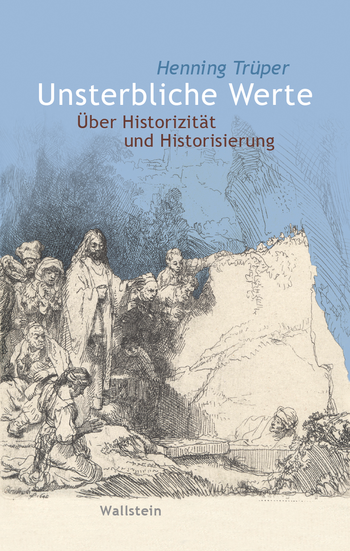
has been published in the newest issue of Weimarer Beiträge.
Posted in Publications, tagged Book Review, History, Theory on January 29, 2026| Leave a Comment »
A review I wrote of Henning Trüper’s thoughtful consideration of historicity and historicisation in
Unsterbliche Werte. Über Historizität und Historisierung
has been published in the newest issue of Weimarer Beiträge.
Posted in Publications, tagged Depoliticization, European History, History, Neoliberalism, Nineteenth Century, Politics, Twentieth Century on January 4, 2026| 1 Comment »
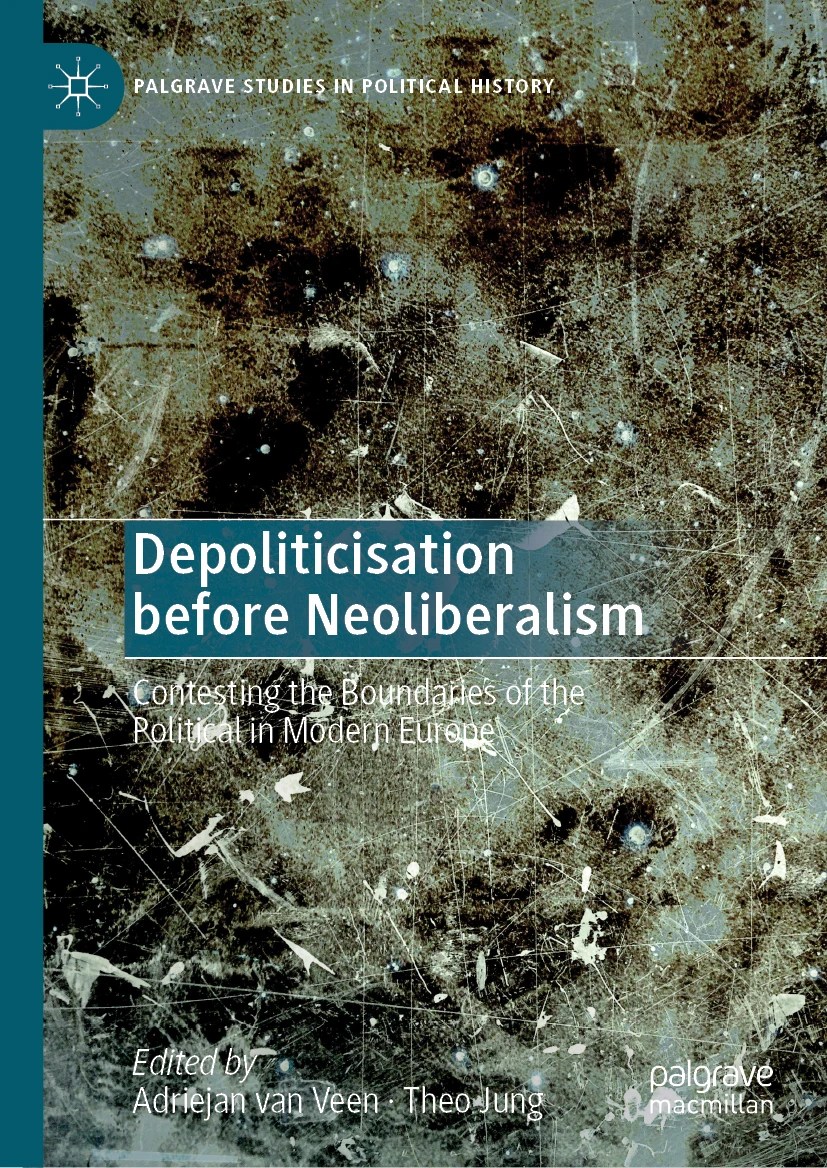
It took a while, but the volume
Depoliticisation before Neoliberalism: Contesting the Boundaries of the Political in Modern Europe
edited by Adriejan van Veen and myself is now published as part of the series Palgrave Studies in Political History.
I want to thank all our contributors for their hard work and patience. Above all, I am grateful to my co-editor Adriejan van Veen (Nijmegen University), who not only obtained the necessary funding for this project, but with his dogged precision and keen intellect made the volume into what it is.
This book analyses processes of depoliticisation in modern Europe from the emergence of a distinct ‘political’ sphere in the late eighteenth century until the present day. Drawing on case studies from across the continent, it demonstrates that depoliticisation has played an integral part in the contestation of modern politics since its inception. Developing a novel conceptual framework, the authors argue that depoliticisation is much more than a simple negation of politics. Rather than an anonymous and amorphous process, depoliticisation often presents an express, actor-driven effort, with modes and forms no less varied than the more familiar manifestations of politicisation. Consequently, the chapters encompass a whole range of depoliticising discursive strategies, performative practices, and institutional rearrangements, playing out across different regime types, from revolutionary orders and representative governments with limited franchises to mass democracies and totalitarian dictatorships. Illustrating how historical actors understood ‘the political’ and in which ways they intervened to renegotiate its boundaries, this book seeks to enhance our understanding of modern politics and pose questions that still resonate today. At a time when the boundaries of the political are once more heavily contested, this book offers thought-provoking insights that will appeal to scholars of history, political science, and sociology, as well as to activists and political practitioners.
Posted in Conference, tagged Conference, Eighteenth Century, Enlightenment, History, Imagination, Nineteenth Century, Politics, Public Sphere, Twentieth Century on November 3, 2025| Leave a Comment »
On 20 to 22 November, the yearly symposium of the Martin-Luther-University’s Research Focus “Enlightenment – Religion – Knowledge” will take place under the title
Jenseits des Gerichtshofs: Alternative Imaginationen moderner Öffentlichkeit
(Beyond the Court: Alternative Imaginations of the Modern Publich Sphere)
The symposium has been organized by my colleague Daniel Weidner and myself and will include contributions by
Lucian Hölscher (Bochum), Nils Kumkar (Bremen), Simone Jung (Lüneburg/Halle), Yvonne Kleinmann (Halle), Robert Fajen (Halle), Patrick Primavesi (Leipzig), Uta Lohmann (Hamburg), Christian Harun Maye (Basel), Elke Dubbels (Bonn), Kirk Wetters (Yale), Rieke Trimçev (Halle), Daniel Fulda (Halle), Silke Fürst (Zürich) and Stephan Pabst (Halle).
For further information on the venues and program, see here.
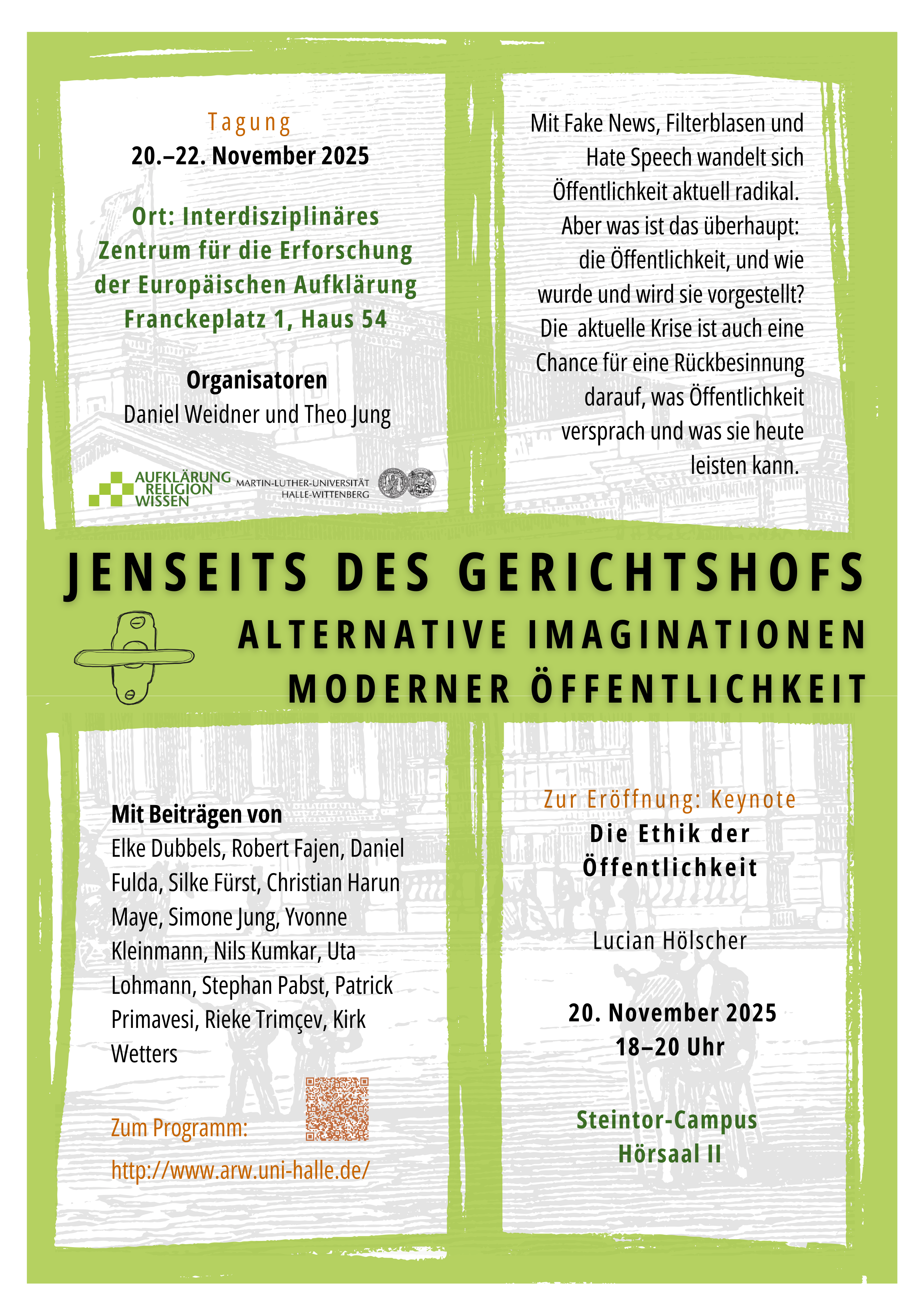
AbstractIn recent years, there has been renewed talk of a crisis of the public sphere. Filter bubbles and fake news, unrestrained insults and cancel culture are discussed as symptoms of decay, disintegration, or dysfunction of the publis phere – although, of course, these debates themselves take place within the public sphere itself. But what, in fact, is this “public sphere”? How de we imagine it, how do we describe it, and what conclusions do we draw from this?
The current diagnosis of crisis offers an opportunity for a critical genealogy, since the sense of crisis may itself stem, not least, from the fact that certain established imaginations of the public sphere have become fractured and questionable. Such a moment invites renewed reflection on what the public sphere was, is, and could be – and may point to traces laid down since the formative period of modern publics that have as yet not been fully pursued.
Posted in Presentation, tagged Bonn, Conference, Democracy, Dynamics, History, Loughborough, Nineteenth Century, Theory on August 30, 2025| Leave a Comment »
Next week, I’ll be speaking at the German History Society’s Annual Conference in Loughborough. I’m part of a panel on “Democracy in German Lands, 1780-1870”, organized by Prof. Mark Philp. My own talk is titled
Prussian Democracy? Territorial Variations in a Complex State (1815-1870)
I will address the variability of the concept of democracy in the Prussian context, focusing on some lesser-known patterns of use, especially the issues of democratic bureaucracy and local democracy.
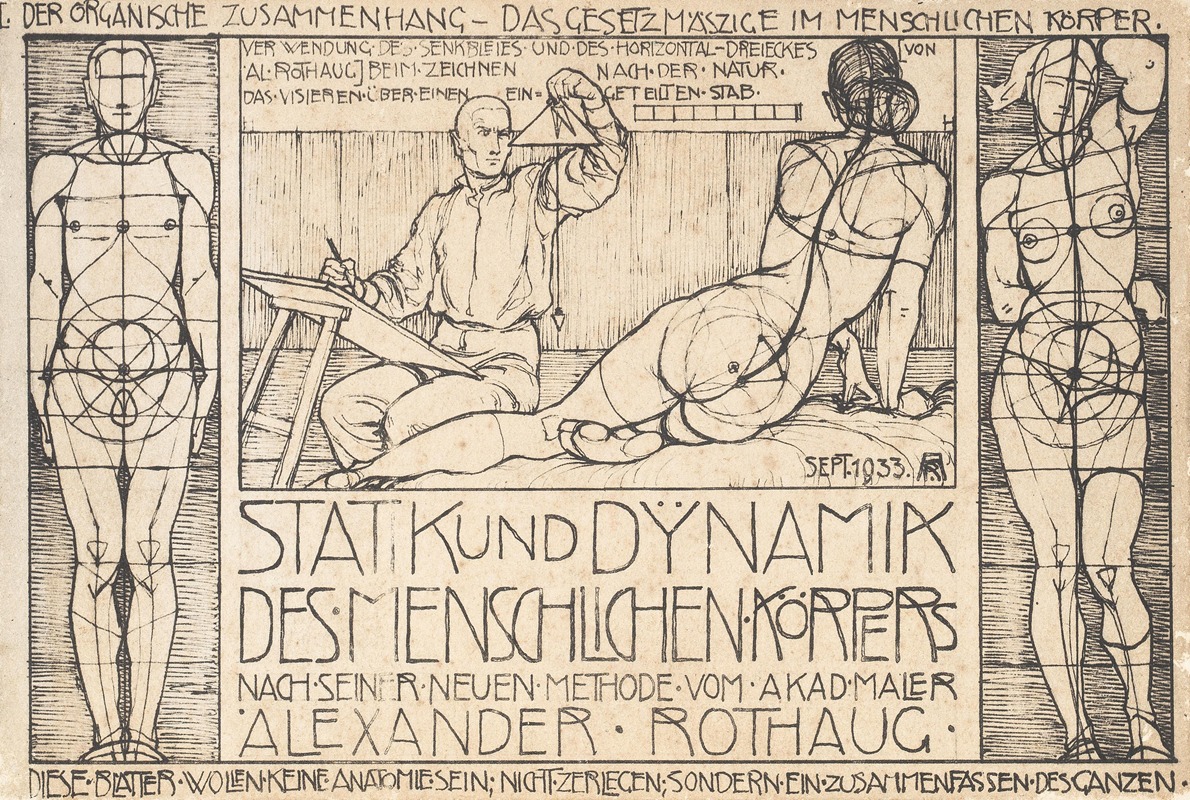
Shortly after, I’ll attend the 55th German History Society’s biannual conference (Historikertag) in Bonn. In the context of a panel on the meanings of the concept of “dynamics” in historical scholarship (“Die Macht der Dynamik. Theoretische Zugänge zu einem historischen Schlüsselbegriff“), my contribution is titled
Dynamik und Statik (Dynamics and Statics)
In it, I will question the common way in which these concepts are framed in terms of a dichotomy or opposition, instead asking how historical scholarship copes with situations that are dynamic and static at the same time (but in different ways).
Posted in Publications, tagged Anne Reichold, Debate, German Empire, Gregor Gysi, History, Nineteenth Century, Norbert Lammert, Radio on August 22, 2025| Leave a Comment »
In a series on the “power of words”, the German radio show Systemfragen on Deutschlandfunk produced an episode on the question why cultivated discussion so often breaks down. In it, I was interviewed on the culture of political conflict during the German Empire (1871-1918) and its implications for debating cultures in the present.
The other guests were Gregor Gysi (Die Linke), the former president of the German Bundestag Norbert Lammert, and the philosopher Anne Reichold.
The episode was broadcast on August 21, 2025. En extended version can be found online here as well as on all podcast platforms.
Many thanks to the Deutschlandfunk team and especially to Luca Rehse-Knauf, who conducted the interview.
Posted in Publications, tagged Academic Careers, Bielefeld Graduate School in History and Sociology, History on July 25, 2025| Leave a Comment »
The Bielefeld Graduate School in History and Sociology, in which I received my PhD in 2010, recently conducted an interview with Prof. Dorothee Wilm and myself on our experiences on the academic career path.
Parts of the interview and the subsequent discussion with current PhD students at the BGHS have been turned into a blog post titled
Costs and rewards on the path to a professorship
on their website.

Posted in Jobs, tagged Criticism, Eighteenth Century, Enlightenment, History, Job offer, Martin-Luther-University Halle-Wittenberg, Nineteenth Century, Twentieth Century on June 2, 2025| Leave a Comment »
The Research Focus Group ‘Enlightenment – Religion – Knowledge‘ based at the Martin-Luther-University Halle-Wittenberg is offering a 1-year postdoctoral fellowship under the title “Kritik im Widerstreit” (criticism in contest), beginning on October 1, 2025.
The research focus group is dedicated to the historical Enlightenment and its continued legacy up to the present. This includes, not least, the concept of “criticism,” which was first emphatically formulated during the Enlightenment and is currently again the subject of intense debate—particularly with regard to its political implications.
Where does criticism stand today, what is it still capable of, and how must we rethink it? What forms of practice are associated with it, what does it mean in different fields—politics, art, the public sphere—how is it shifting under new media conditions, and what political significance does it have in each case?
Today, criticism itself is under criticism: it is said to be elitist, exhausted, and outdated, to defend particular interests, and to serve self-promotion more than its apparent cause. Particularly disturbing is the fact that critical arguments seem to be easily appropriated by their opponents: Today, prohibitions on thinking are proclaimed in the name of “freedom”; exclusions in the name of “equality”; and questionable dogmas in the name of “criticism”. What remains of criticism if one does not want to abandon it entirely but has given up belief in a “critique of critical criticism” (Marx)?
The scholarship is intended to serve as a means of investigating and discussing political figurations of criticism between appropriation and dismissal together with other scholars involved in research focus group. Applicants should propose an academic project (aimed at publishing an academic article) and, within this framework, organize and host an academic event; accompanying formats such as readings, panel discussions, exhibitions, guided tours, etc. are also conceivable and can be financed with ARW funds.
Deadline for applications is 27 June, 2025.
More information on the fellowship and application procedure can be found here.
Posted in Conference, Presentation, tagged History, Nineteenth Century, Panel Discussion, Parliament, Politics, Twentieth Century on May 23, 2025| Leave a Comment »
In the context of a two-day workshop organized by my colleague Paulina Gulińska-Jurgiel and myself about methodological developments in the historical scholarship on parliaments, we present a public panel discussion (in German) titled
The Endangered Legislative? Historical and Contemporary Challenges in Dialogue

With our guests
Dr. Claudia Gatzka (Albert-Ludwigs-Universität Freiburg)
Prof. Dr. Thomas Lindenberger (Hannah-Arendt-Institut für Totalitarismusforschung / TU Dresden)
Dr. Danny Schindler (Institut für Parlamentarismusforschung)
we discuss the current state of parliamentary politics against the background of historical crises and developments.
Abstract
With every state and federal election, debates about the state of democracy are reignited. Ardent debates circle around justified fears of far-right parties entering parliaments and the associated risk of the institution being undermined or disempowered. While the legislature is often seen as the last fortress of democratic rule, it also increasingly appears as a fragile construct. But what is its real status today? What can parliaments and the people involved in them actually do against the onslaught of opposing forces? What instruments do they have at their disposal to protect themselves and democracy? Or should we look for alternative formats and ways of democratic representation that go beyond the concept of a legislative as the only legitimate representation of the people, enabling a different kind of social participation without falling into the trap of populism?
The discussion, which is open to all interested (free of charge), takes place in the university’s Aula (Löwengebäude), on June 25, 6 – 8 pm.
Posted in Presentation, tagged Eighteenth Century, Enlightenment, History, Nineteenth Century, Politics on May 6, 2025| Leave a Comment »
The new DFG Research Training Group “Politics of the Enlightenment”, which has started its work at the University of Halle-Wittenberg with eight doctoral and one post-doctoral researchers this month, will be officially inaugurated on May 22.
Besides various presentations by the Training Group’s members, the university’s rector, Prof. Dr. Claudia Becker, will give an official address. The ceremony is concluded with a key note speech by Prof. Dr. Liliane Weisberg, the Training Group’s first fellow and a distinguished expert in the field of Enlightenment studies.
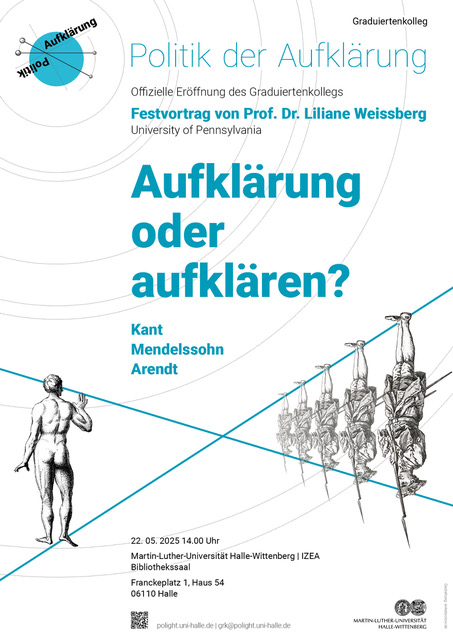
The ceremony will be held at the library of the Interdisciplinary Centre for European Enlightenment Studies. All are welcome to join us for this festive occasion.
Posted in Publications, tagged History, Nineteenth Century, Politics, Secrecy, Silence on May 2, 2025| Leave a Comment »
For the upcoming issue on silence to be published on May 15 by the Zeitschrift für Ideengeschichte, I’ve written a short article on the complex tensions between publicity and secrecy in the European secret societies of the late eighteenth and early nineteenth centuries.
Arkanum a. D. Geheimgesellschaften und Öffentlichkeit, in: Zeitschrift für Ideengeschichte 19, Nr. 2 (2025), 50–58. DOI: 10.17104/1863-8937-2025-2-50.
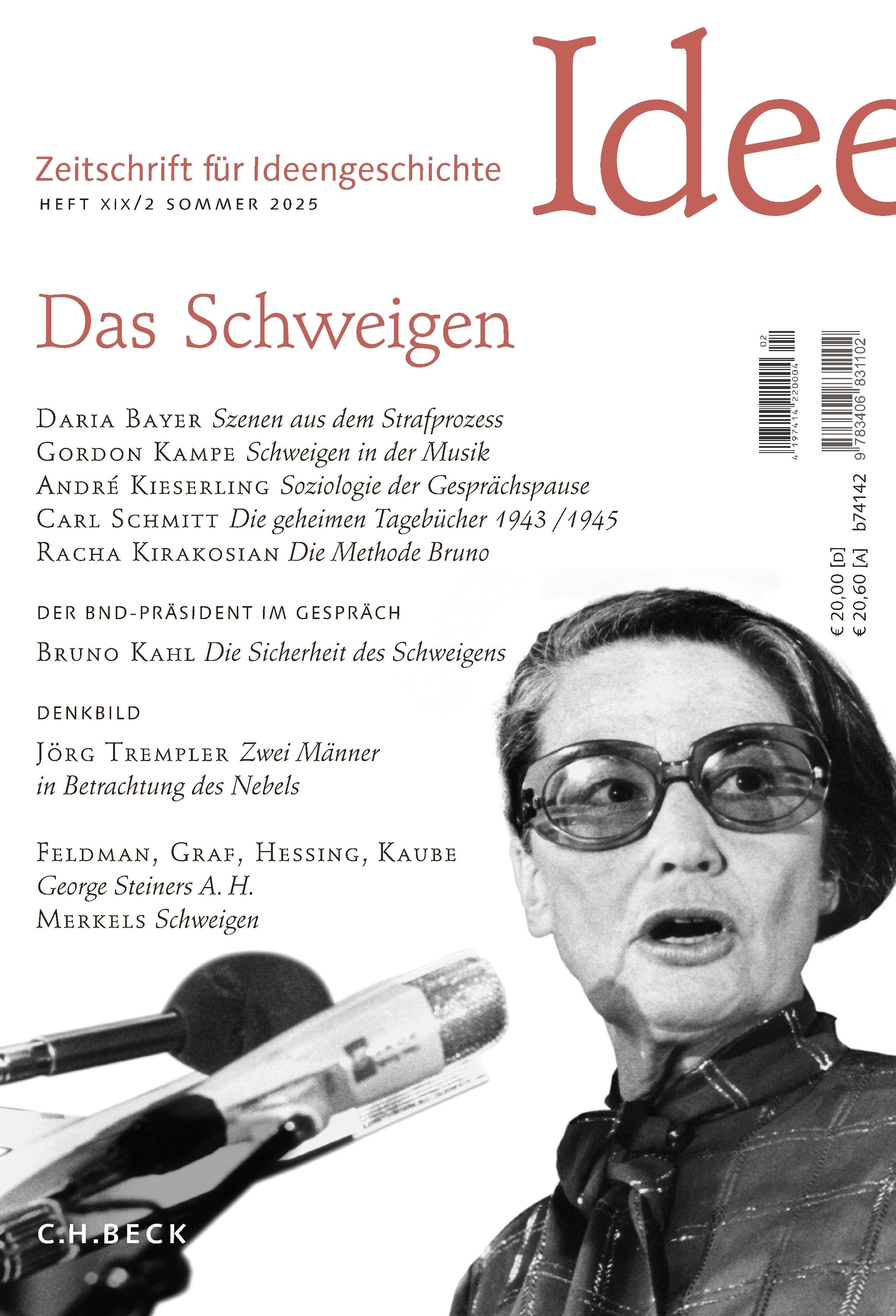

I’m looking forward to reading the other contributions and thank the editors for their thorough assistance with the writing and publication process.
 Theo Jung