Feeds:
Posts
Comments

Posts Tagged ‘European History’

It took a while, but the volume

Depoliticisation before Neoliberalism: Contesting the Boundaries of the Political in Modern Europe

edited by Adriejan van Veen and myself is now published as part of the series Palgrave Studies in Political History.
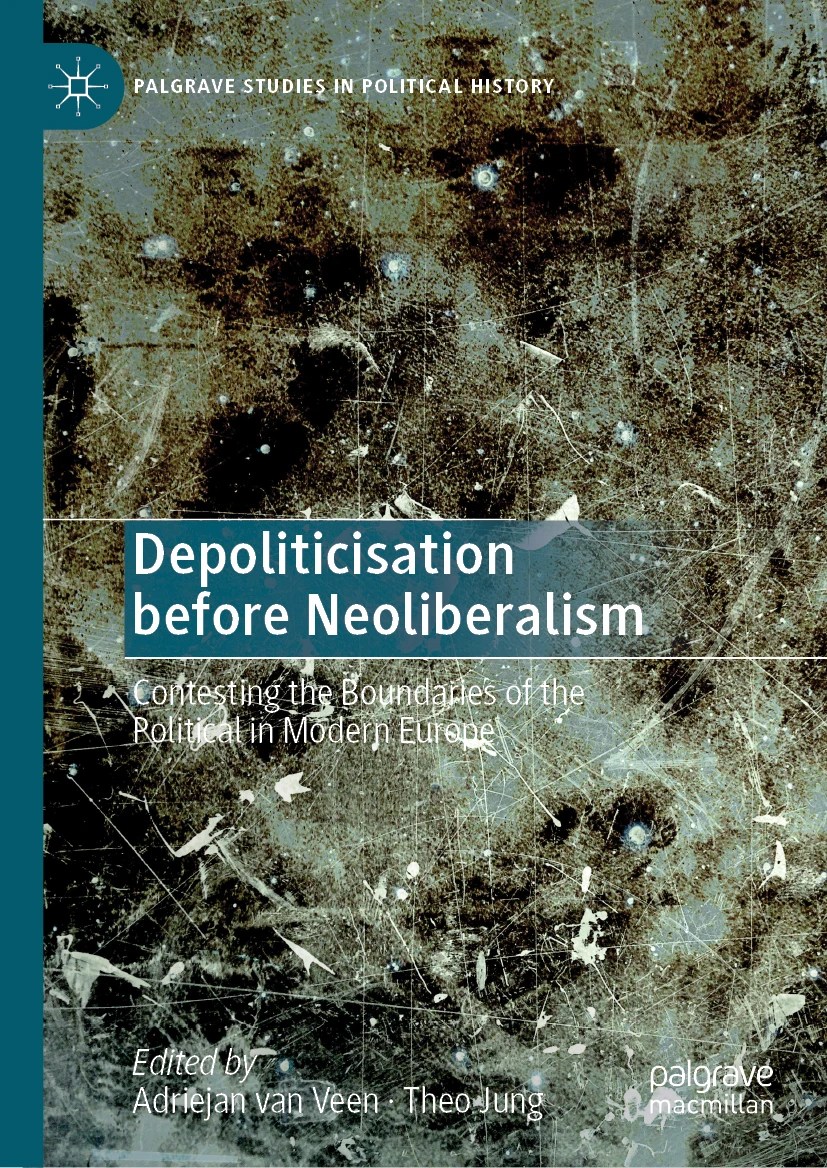
I want to thank all our contributors for their hard work and patience. Above all, I am grateful to my co-editor Adriejan van Veen (Nijmegen University), who not only obtained the necessary funding for this project, but with his dogged precision and keen intellect made the volume into what it is.

Volume abstract

This book analyses processes of depoliticisation in modern Europe from the emergence of a distinct ‘political’ sphere in the late eighteenth century until the present day. Drawing on case studies from across the continent, it demonstrates that depoliticisation has played an integral part in the contestation of modern politics since its inception. Developing a novel conceptual framework, the authors argue that depoliticisation is much more than a simple negation of politics. Rather than an anonymous and amorphous process, depoliticisation often presents an express, actor-driven effort, with modes and forms no less varied than the more familiar manifestations of politicisation. Consequently, the chapters encompass a whole range of depoliticising discursive strategies, performative practices, and institutional rearrangements, playing out across different regime types, from revolutionary orders and representative governments with limited franchises to mass democracies and totalitarian dictatorships. Illustrating how historical actors understood ‘the political’ and in which ways they intervened to renegotiate its boundaries, this book seeks to enhance our understanding of modern politics and pose questions that still resonate today. At a time when the boundaries of the political are once more heavily contested, this book offers thought-provoking insights that will appeal to scholars of history, political science, and sociology, as well as to activists and political practitioners.

Contents

  • Adriejan van Veen and Theo Jung: Depoliticisation in Modern European Politics: An Introduction
  • Ido de Haan: Historicising Depoliticisation: Dimensions of the Political and Its Alternatives

    Part I: Discursive Depoliticisation: Ideas, Concepts, and Rhetoric
  • Matthijs Lok: Depoliticisation after Revolution: Moderation, Science and the State in the Nineteenth Century
  • Tamar Kojman: Between Religion and Politics: Constructing an Apolitical Sphere after the 1848–1849 German Revolutions
  • Ruben Ros: Depoliticising Democracy: Technocratic Antipolitics in Dutch Interwar Political Culture (1917–1939)
  • Stefan Scholl: Depoliticising the Economy? Semantic Struggles about ‘Politics’ and ‘the Economy’ during the Weimar Republic and National Socialism

    Part II: Doing Depoliticisation: Practices and Performances
  • Adriejan van Veen: “The Silent Citizen Became a Hero!” State, Civil Society, and the Depoliticisation of Dutch Society in the Restoration Era
  • Oriol Luján: Not Only Apathy and Disinterest: Abstention and the Blank Vote as Modes of Repoliticisation in Nineteenth-Century Europe
  • Eva Visser: Planning the Technate: The Apolitical Politics of the 1930s’ Technocratic Movement in the United States and Europe
  • Zoé Kergomard: Depoliticisation in Danger of Repoliticisation? The Ambiguities of Gaullist Get-Out-the-Vote Campaigns in the Early French Fifth Republic (1958–1969)
  • Adéla Gjuričová: Antipolitics as a Political Tool of Czech Dissent: From Earlier Roots to Its Second Life after 1989

    Part III: Institutional Depoliticisation: Delegation and Neutralisation
  • Mart Rutjes: Access Denied: The Institutional Depoliticisation of Representative Government during the Dutch Revolution, 1780–1801
  • Jan-Markus Vömel: (Un)Political Islam? Contesting the Turkish State’s Depoliticisation of Islam
  • Wim de Jong: The Police and the Political: The Problem of Depoliticisation in Dutch Municipal Policing, 1945–2002
  • Anna Catharina Hofmann: An Administered Society? Economic Planning and (De)Politicisation in the Late Franco Dictatorship
  • Koen van Zon: Eliminating Pests, Eliminating Politics? The European Community’s Regulation of Pesticides, 1958–1991

Read Full Post »

After a remarkably smooth editing process, Popular Agency and Politicisation in Nineteenth-Century Europe: Beyond the Vote, has now been published in the Palgrave Studies in Political History series. Edited by Diego Palacios Cerezales (Madrid) and Oriol Lujàn (Barcelona), the volume encompasses contributions on a wide variety of political practices and spaces, opening new perspectives on the politicization processes that shaped nineteenth-century Europe.

Most chapters were first discussed in the Conference Beyond the Vote: New Perspectives on 19th Century Politicisation, held in Madrid/online in January 2021.

My own chapter, titled

Plebiscites on the Streets: The Politics of Public Acclamation in Early Nineteenth-Century Europe

addresses the dynamics of performative displays of enthusiasm and disdain in public confrontations between rulers and ruled.

While acclamations remain a familiar phenomenon today, they tend to be understood as an atmospheric, rather than a functional, element of political life. In consequence, the historical variability of their practice and impact remains understudied. Building on a survey of current research, this contribution addresses the forms, functions and situations of acclamation in Europe during the Age of Revolutions.

Focusing on the tensions between the practice’s symbolic holism – suggesting a direct expression of the communities’ undivided will – and its underlying complexities as a mode of collective action, it argues that acclamations gained a historically unique impact during the (post-)revolutionary period. While other opportunities for political articulation and participation remained sharply constrained, these public vocalizations presented one of the very few available modes of regular political engagement. At the same time, public interactions between rulers and ‘the people’ gained new performative significance against the background of experiences of political upheaval and regime change.

A consideration of a wide range of case studies from across the continent shows how practices of acclamation and their reception became part of a transnationally entangled contestation of political legitimacy, constituting an ephemeral, but momentous mode of popular politics.

Many thanks to the editors for their hard work in getting this excellent volume together.

Read Full Post »

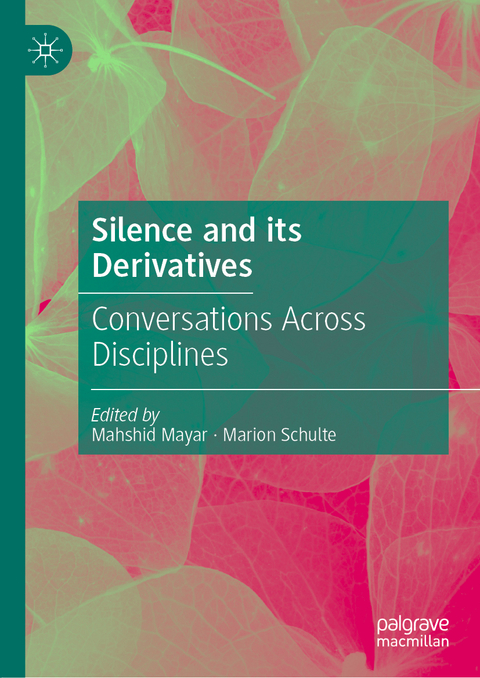
For an interdisciplinary volume on silence edited by Mahshid Mayar (Cologne) and Marion Schulte (Bielefeld), I wrote a chapter on the way Europeans have historically framed the question of ‘talkative’ and ‘taciturn’ nations.

Even today, we often think of authoritarian and dictatorial regimes in terms of ‘silence’, while parliamentary and democratic politics are linked to the category of ‘voice’. Retracing the historical emergence of such conceptualizations during the late eighteenth and early nineteenth centuries, my chapter aims at a reconsideration of these familiar, but reductive binaries.

Exploring French, German, and British discourses on the question why some nations are more talkative than others brings to light a fundamental shift in the understanding of communication around the turn of the nineteenth century, when explanations in terms of national character were gradually superseded by a point of view linking taciturnity and talkativeness to specific political regimes.

This gradual reorientation from a spatio-cultural to a temporal framing coincided with a distinct politicization of the question of communication (and its absence) which still resonates today. Placing our current understanding of the significance of voice and silence into a wider historical perspective thus contributes to a reconsideration of the meanings of communication in the modern world.

  • Talkative and Taciturn Nations. Ethnographic and Political Perspectives in European Discourses on Communicative Cultures (c. 1750–1850), in: Mahshid Mayar und Marion Schulte (eds): Silence and its Derivatives. Conversations Across Disciplines. London 2022, 87–108.

The chapter can be downloaded here. The whole volume is to be found here.

Many thanks to the editors for their meticulous organization of the publishing process.

Read Full Post »