Feeds:
Posts
Comments

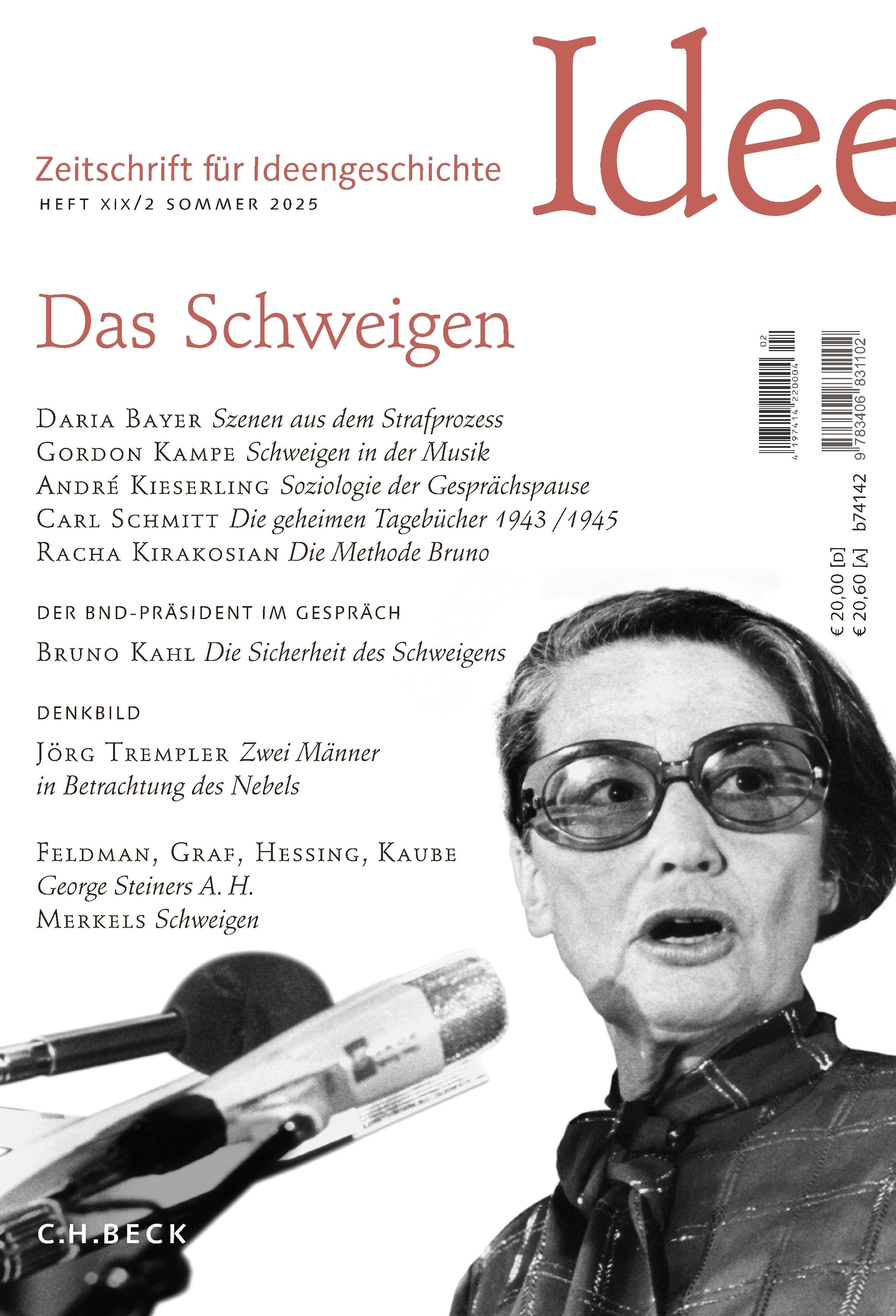
For the upcoming issue on silence to be published on May 15 by the Zeitschrift für Ideengeschichte, I’ve written a short article on the complex tensions between publicity and secrecy in the European secret societies of the late eighteenth and early nineteenth centuries.

Arkanum a. D. Geheimgesellschaften und Öffentlichkeit, in: Zeitschrift für Ideengeschichte 19, Nr. 2 (2025), 50–58. DOI: 10.17104/1863-8937-2025-2-50.

I’m looking forward to reading the other contributions and thank the editors for their thorough assistance with the writing and publication process.

I’m pleased to announce that together with my colleague Pia Schmüser, I’ll be presenting at the upcoming international conference “Egodocuments from Medieval Codex to Modern Media: Narratives, Presentations, Identities“, which takes place in Vilnius from May 15–17, 2025.

Our presentation is titled:
“Diaries as Alter-Ego-Documents: Constructions of Diaries as a Personified Dialogical ‘Other’ in Late 19th and 20th Century Germany.”

Our talk is part of our broader collaborative work within the research project “Between Voice and Silence: Communicative Norms in Diaries, 1840-1990”, funded by The Leverhulme Trust as a collaboration between the University of Reading, UK, and the University of Halle Wittenberg, Germany, with support from The Great Diary Project in London and the German Diary Archive (Deutsches Tagebucharchiv) in Emmendingen.

The conference, organized by Nicolaus Copernicus University in Toruń, Vilnius University and the University of Lodz within the context of the International Egodocumental Research Group, brings together scholars from across Europe to explore the interpretive potential of ego-documents—letters, diaries, autobiographies, and more—as vital sources for understanding historical subjectivities and experiences. We’re very much looking forward to the exchange of ideas and the opportunity to connect with fellow researchers working on the many voices—spoken and unspoken—of the past.

More about the conference can be found here and here.

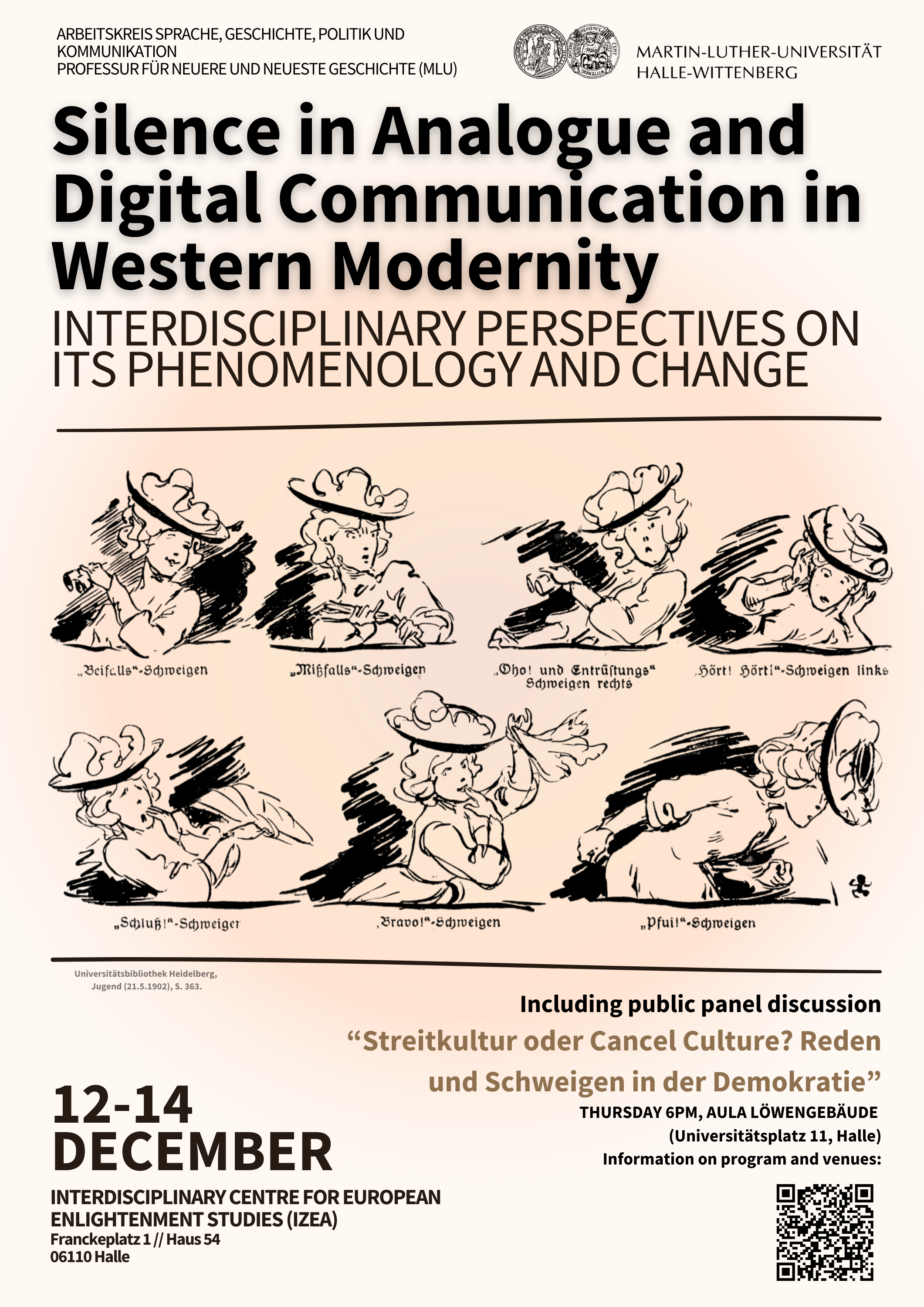
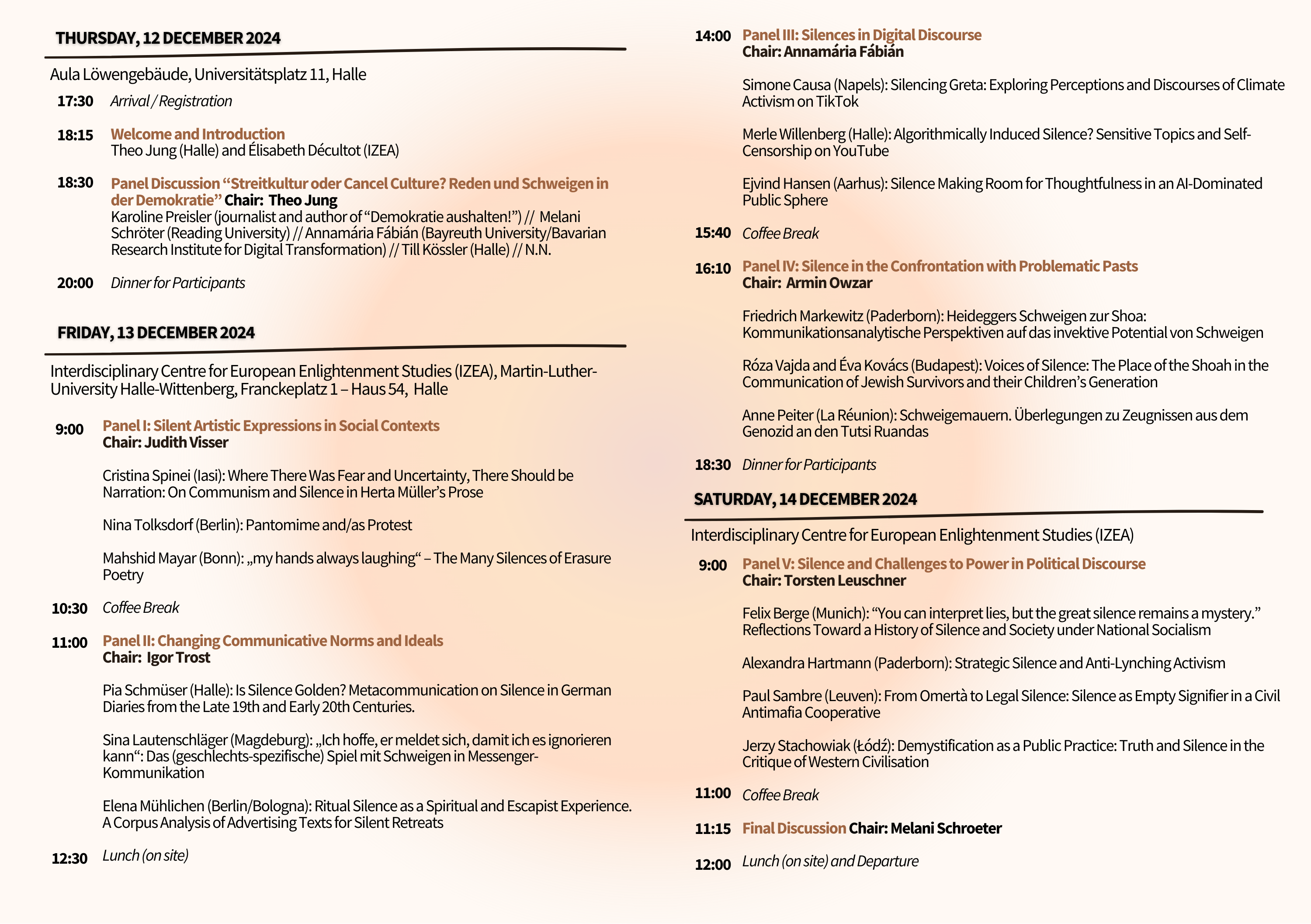
As announced earlier this year, from 12 to 14 December the University of Halle-Wittenberg will host the interdisciplinary conference Silence in Analogue and Digital Communication in Western Modernity. Interdisciplinary Perspectives on Its Variety and Change.

This event is organized by the Arbeitskreis Sprache, Geschichte, Politik und Kommunikation in cooperation with Martin-Luther-University’s Chair of Modern and Contemporary History.

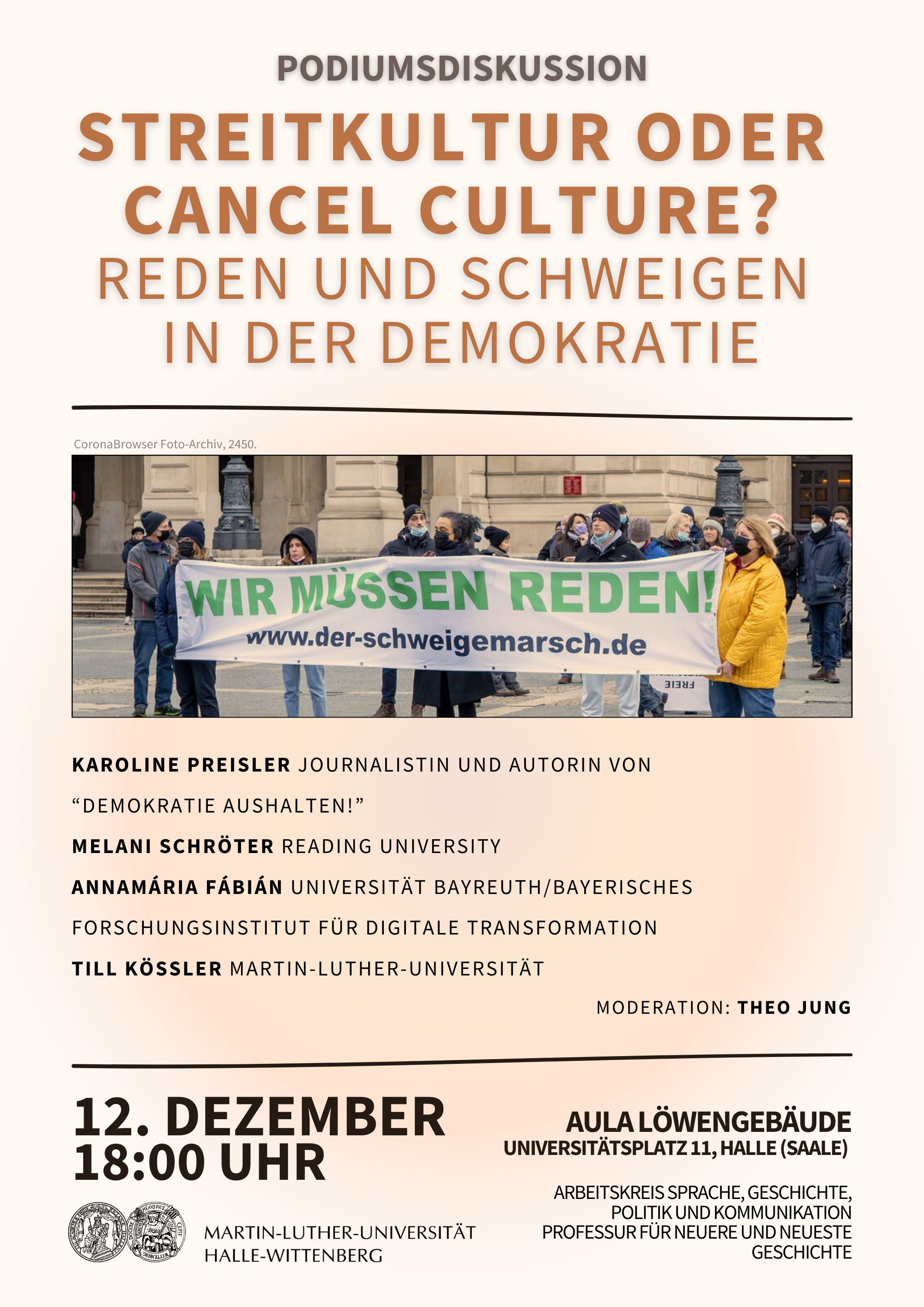
The conference begins with a panel discussion (in German) involving experts from journalism and various academic disciplines, who will tackle the many tensions between speech and silence apparent in current democratic regimes. This event is open to the public and entry is free. It takes place in the university’s main building (Löwengebäude, Universitätsplatz 11).

Many thanks in advance to Karoline Preisler, Melani Schröter, Annamária Fábián, and Till Kössler for their willingness to join in this discussion.

On Friday and Saturday, we continue with a dense program of presentations from the fields of history, literature, media studies, linguistics, memory studies and philosophy. Again, anyone is very welcome to attend one or more of the panels. Please note the different venue for Friday and Saturday: the Interdisciplinary Centre for European Enlightenment Studies, Franckeplatz 1 – Haus 54.

The organizing committee includes: Torsten Leuschner (Ghent), Judith Visser (Bochum), Annamária Fábián (Bayreuth), Armin Owzar (Paris), Melani Schroeter (Reading), Igor Trost (Passau), and myself.

Many thanks in advance to all those participating in the conference, to my co-organizers, as well as to my colleagues at the Chair of Modern History, who have made this possible.

To dowload the program, click here.

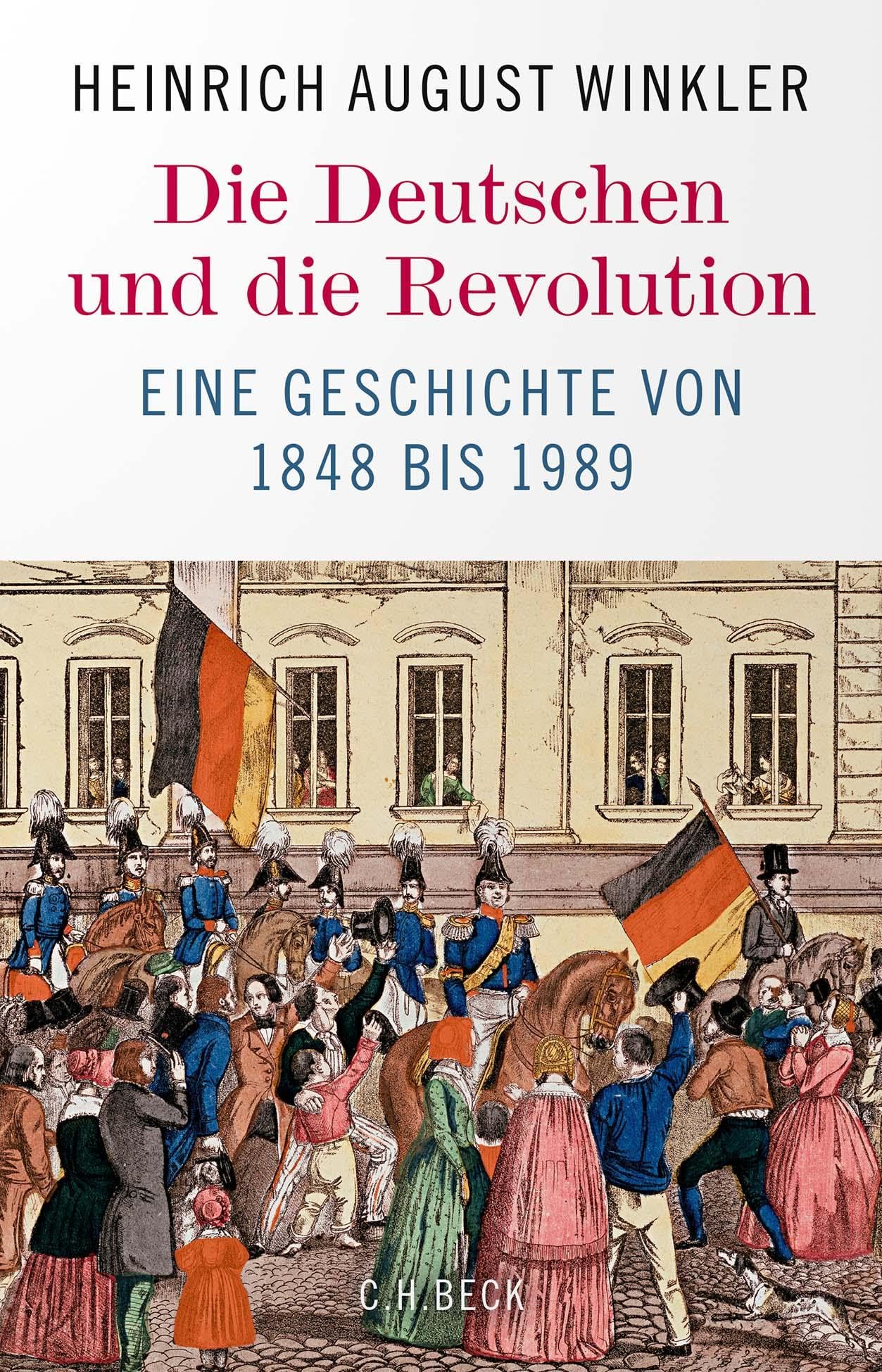
For the platform sehepunkte, I wrote a short review of Heinrich August Winkler’s “Die Deutschen und die Revolution. Eine Geschichte von 1848 bis 1989”.

The book takes a fresh look at the highly controversial, but still quite common notion that the Germans are a “people without a revolution”, a view which has been at the centre of debates about the specific nature of German history ever since the controversies over the so-called “Sonderweg thesis”.

The book comes highly recommended to all who want to delve into this topic under the able guidance of one of the most respected experts on German history there is.

The full review is available here.

Building on a workshop organized by my colleague Adriejan van Veen and me in 2022, we have been working on an edited volume titled “Depoliticisation before Neoliberalism. Contesting the Boundaries of the Political in Modern Europe”. We were able to bring together a range of scholars from diverse national backgrounds and with different areas of expertise to study the phenomenon of depoliticisation in a long-term and european-wide perspective.

We are very happy that the volume has now been announced as part of the series Palgrave Studies in Political History.

The book’s announcement reads as follows:

This book analyses processes of depoliticisation in modern Europe from the emergence of a distinct ‘political’ sphere in the late eighteenth century until the present day. Drawing on case studies from across the continent, it demonstrates that depoliticisation has played an integral part in the contestation of modern politics since its inception. Developing a novel conceptual framework, the authors argue that depoliticisation is much more than a simple negation of politics. Rather than an anonymous and amorphous process, depoliticisation often presents an express, actor-driven effort, with modes and forms no less varied than the more familiar manifestations of politicisation. Consequently, the chapters encompass a whole range of depoliticising discursive strategies, performative practices, and institutional rearrangements, playing out across different regime types, from revolutionary orders and representative governments with limited franchises to mass democracies and totalitarian dictatorships. Illustrating how historical actors understood ‘the political’ and in which ways they intervened to renegotiate its boundaries, this book seeks to enhance our understanding of modern politics and pose questions that still resonate today. At a time when the boundaries of the political are once more heavily contested, this book offers thought-provoking insights that will appeal to scholars of history, political science, and sociology, as well as to activists and political practitioners.

Behind the scenes, my co-editor and I are still busy working out the last stages of the publishing process and it will probably still take some time until we hold the actual book in our hands, but we are very content that we are now seeing some first ‘signs of life’ and want to express our heartfelt gratitude to our contributors.

Table of contents

  • Adriejan van Veen and Theo Jung: Depoliticisation in Modern European Politics: An Introduction
  • Ido de Haan: Historicising Depoliticisation: Dimensions of the Political and Its Alternatives

    Part I: Discursive Depoliticisation: Ideas, Concepts, and Rhetoric
  • Matthijs Lok: Depoliticisation after Revolution: Moderation, Science and the State in the Nineteenth Century
  • Tamar Kojman: Between Religion and Politics: Constructing an Apolitical Sphere after the 1848–1849 German Revolutions
  • Ruben Ros: Depoliticising Democracy: Technocratic Antipolitics in Dutch Interwar Political Culture (1917–1939)
  • Stefan Scholl: Depoliticising the Economy? Semantic Struggles about ‘Politics’ and ‘the Economy’ during the Weimar Republic and National Socialism

    Part II: Doing Depoliticisation: Practices and Performances
  • Adriejan van Veen: “The Silent Citizen Became a Hero!” State, Civil Society, and the Depoliticisation of Dutch Society in the Restoration Era
  • Oriol Luján: Not Only Apathy and Disinterest: Abstention and the Blank Vote as Modes of Repoliticisation in Nineteenth-Century Europe
  • Eva Visser: Planning the Technate: The Apolitical Politics of the 1930s’ Technocratic Movement in the United States and Europe
  • Zoé Kergomard: Depoliticisation in Danger of Repoliticisation? The Ambiguities of Gaullist Get-Out-the-Vote Campaigns in the Early French Fifth Republic (1958–1969)
  • Adéla Gjuričová: Antipolitics as a Political Tool of Czech Dissent: From Earlier Roots to Its Second Life after 1989

    Part III: Institutional Depoliticisation: Delegation and Neutralisation
  • Mart Rutjes: Access Denied: The Institutional Depoliticisation of Representative Government during the Dutch Revolution, 1780–1801
  • Jan-Markus Vömel: (Un)Political Islam? Contesting the Turkish State’s Depoliticisation of Islam
  • Wim de Jong: The Police and the Political: The Problem of Depoliticisation in Dutch Municipal Policing, 1945–2002
  • Anna Catharina Hofmann: An Administered Society? Economic Planning and (De)Politicisation in the Late Franco Dictatorship
  • Koen van Zon: Eliminating Pests, Eliminating Politics? The European Community’s Regulation of Pesticides, 1958–1991

Under the auspices of the Cemetery of the March Fallen in Berlin, I’ve been part of a collaborative effort to develop a didactic manual aimed at schools, focusing on the German Revolution of 1848/49.

The resulting brochure emphasizes the “ambivalences” present in the revolution when viewed through the lens of democratic history. It features introductory texts, historical sources, and didactic concepts tailored for classroom use. Divided into three thematic blocks, it explores the history of nationalism, gender relations, and Jewish emancipation alongside the challenges of antisemitism.

I’d like to extend my heartfelt thanks to all the contributors, with special recognition for the brochure’s editors: Susanne Kitschun, Johann Gerlieb, and Paul Schmitz.

For those interested in more information in German, please see here.
You can also download the brochure for free here.

The University’s magazine Campus Hallensis has published a short interview about the research project on nineteenth and twentieth century British and German diaries I’m currently working on together with Dr Pia Schmüser (Halle), Prof Dr Melani Schroeter and Clara Llyod (both Reading).

More information about the binational, interdisciplinary project titled Between Voice and Silence: Communicative Norms in Diaries, 1840-1990, which is funded by the Leverhulme Trust, can be found here.

The interview highlights the importance of diaries as sources for social history as well as the invaluable resource of the Tagebucharchiv Emmendingen. The text, which also addresses another project being developed in Halle’s History Department, can be found here.

Many thanks to Ines Godazgar for taking an interest.

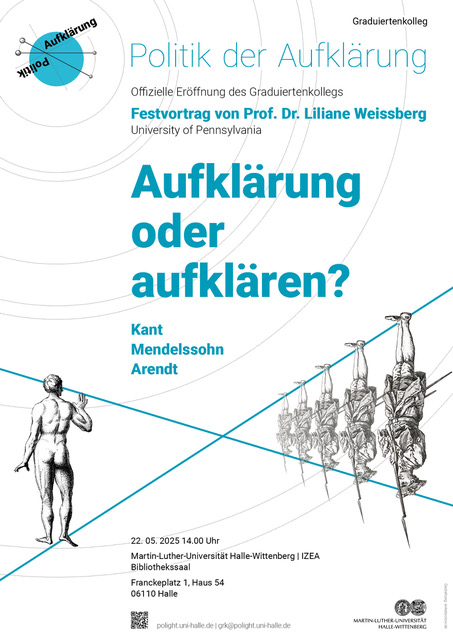
In the coming year, a new DFG Research Training Group “Politics of the Enlightenment” will be established at the Interdisciplinary Center for European Enlightenment Studies (IZEA) at the University of Halle-Wittenberg. We are now seeking applications for the first ‘cohort’.

  • 8 PhD positions of 4 years (48 months) each
  • 1 postdoctoral position of 5 years (60 months)

The first cohort will start on April 1, 2025. Two further cohorts of 5 doctoral students each will be recruited in 2026 and 2027. A second funding phase of the Research Training Group of 4 years is planned from 2030.

The application deadline for the first round of applications is November 4, 2024.

A call for applications for a new 1-year postdoctoral fellowship program in the context of the Research Group “Aufklärung – Religion – Wissen” of the Martin-Luther-University of Halle-Wittenberg has just been published. It’s deadline is August 18, 2024.

For more information on the project, titled “sites of futurity” (Zukunftsorte) and on the application process, see here.

For a volume on practices of silence edited by Karolin Wetjen, Philipp Müller, Richard Hölzl and Bettina Brockmeyer, I wrote a chapter on the emergence of the silent march as a mode of protest.

Der Schweigemarsch. Entstehung und Funktionsvielfalt einer Protestpraxis in Europa und den Vereinigten Staaten (ca. 1880–1925)

[The Silent March. Emergence and Functions of a Protest Practice in Europe and the United States (c. 1880–1925)]

The chapter shows how the silent march first became established in the protest repertoire at the turn of the twentieth century, when in the context of the emerging political mass market various groups experimented with new modes of public protest. It approaches its topic in three steps. Firstly, it asks to what extent the boom of the silent march around 1900 was linked to earlier events of silent protest or to other practices established during the 19th century. Secondly, taking the French case as an example, I sketch the diversity of the contexts in which this mode of protest was used at the turn of the 20th century. The third, longest section takes a closer look at three protest movements in which the silent march played a particularly prominent role (the labor movement, the women’s movement and the African-American civil rights movement). Finally, I draw some comparative conclusions about the functions of this mode of protest and their historical development.