Feeds:
Posts
Comments

Posts Tagged ‘Nineteenth Century’

In the coming summer semester, I will be teaching two courses at Freiburg University.


One seminar course, titled:

Political Arenas: Parliamentary Cultures in the Long 19th Century in Comparison
(see the official website and the pearltree with links about this theme)


And a reading course:

A Small European Country: Introduction to Dutch History (1581-1914)
(see the official website and the pearltree with links about this theme)

Dutch History


Read Full Post »

Some of my writing has been made available online through the Freidoks server at Freiburg University.

Read Full Post »

At a workshop at the ZiF in Bielefeld, I will be presenting a paper on the use of the concept of zeitgeist in early nineteenth century political discourse, titled:

The Politics of Time: Zeitgeist in Early Nineteenth-Century Political Discourse.

The workshop, titled “Zeitgeist: an Inquiry into the Media of Time-Specific Cultural Patterns”, takes place from 19 to 21 September, 2013. For the programm, click here. For the workshop’s concept, click here.

Read Full Post »

This winter semester, I will be teaching one bachelors seminar and an exercise course. As usual, I have assembled a ‘pearltree’ for each of these courses with links to websites on their specific themes.

Bürgertum and Bourgeoisie: A Comparison between the German Empire and the French Third Republic
(Pearltree – websites on this topic)

and

Linguistic Violence and the Theater of Politics: a History of Political Rhetoric (1848-1945)
(Pearltree – websites on this topic)

Read Full Post »

This summer semester I will be teaching one master seminar and an exercise course on the reading of French sources. As usual, I have assembled a ‘pearltree’ for each of these courses with weblinks to the specific themes.

A History of Time – Changing Cultures of Temporality (ca. 1750-1850)
(Pearltree – websites on this topic)

and

Politeness – Sources on the History of Manners in France (ca. 1700-1850)
(Pearltree – websites on this topic)

Read Full Post »

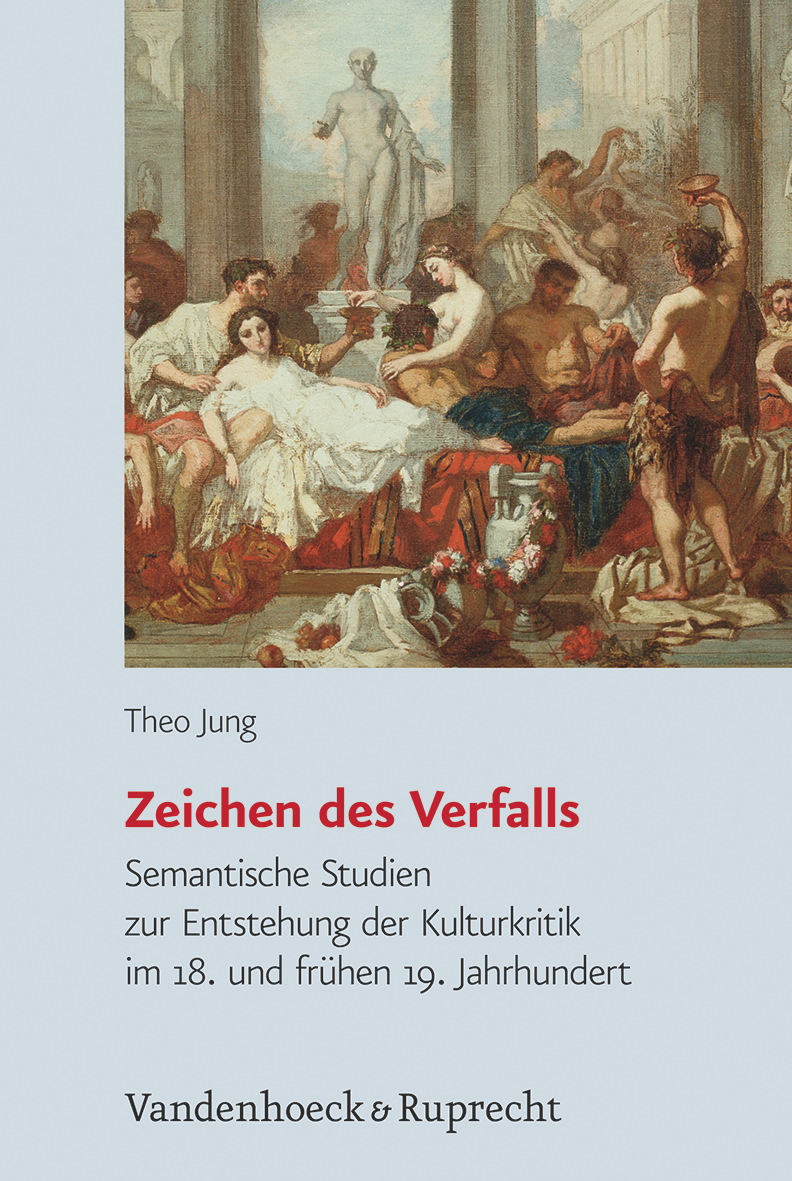
My dissertation has been published as volume 18 of the series ‘Historische Semantik‘ by Vandenhoeck and Ruprecht.

For more information, click here. For ordering from within Germany, click here.

Read Full Post »

As usual, this winter semester I’ll be teaching two courses:

Power and Morals: Britain in the Victorian Age

and

Bourdieu for Historians

Read Full Post »

My courses for the summer semester 2012 are:

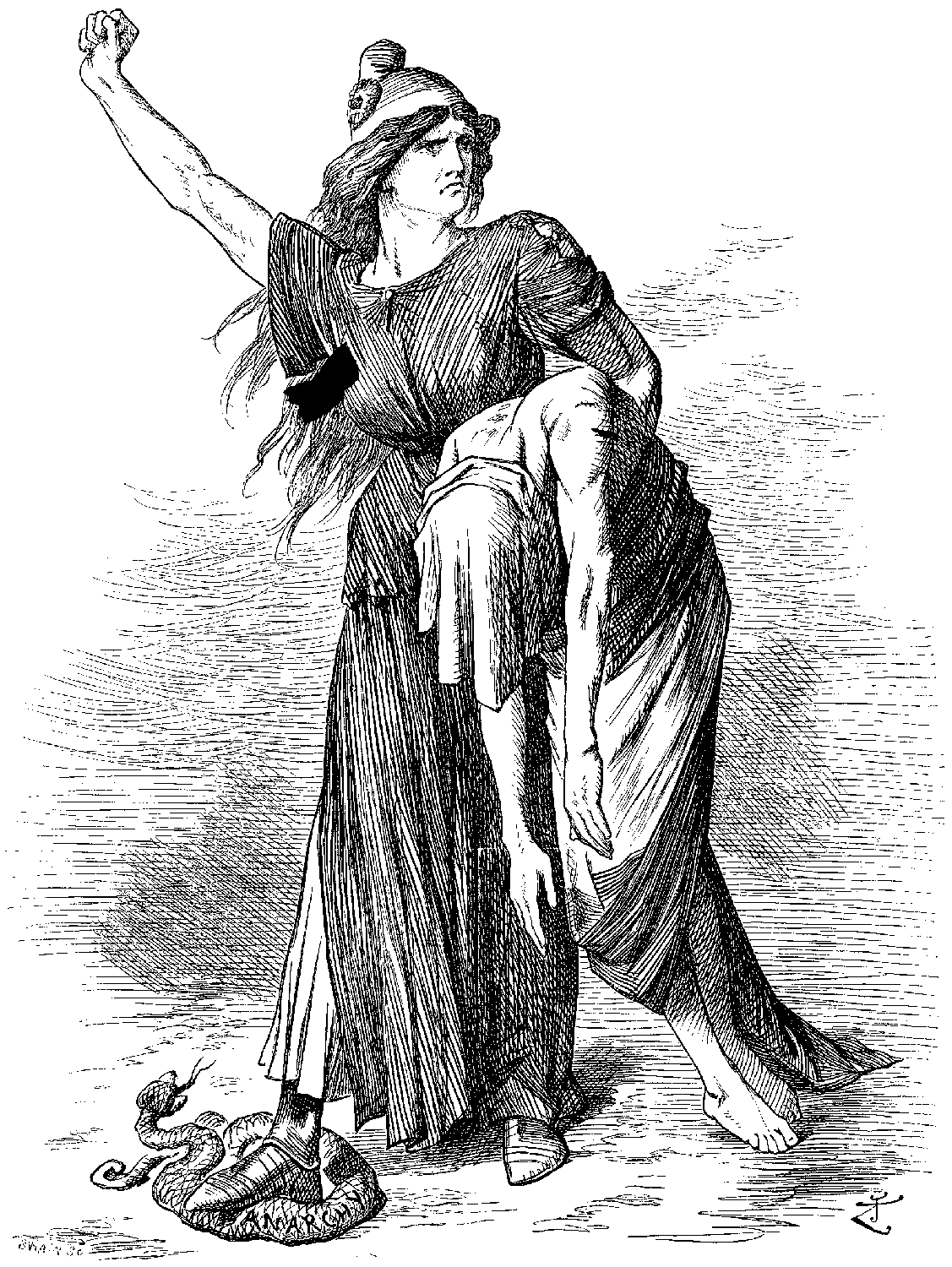
Political Assassinations in the long 19th Century (from Jean Paul Marat to Franz Ferdinand)
Even today, political assassinations are by no means rare. Time and again, individuals or groups decide to use targeted violence as a means to attack or even end a political order that is – in their eyes – unjust. Most often, the key factor in their choice of target is not just his or her political function, but especially their symbolic significance as the representative of a certain political system. The reaction to such events has always been highly controversial, such that at times, the assassins themselves (Charlotte Corday, Carl Ludwig Sand, John Wilkes Booth, Gavrilo Princip) subsequently became as famous as their victims. Taking our starting point from a number of European and American case studies, this course traces the history of the phenomenon of political assassinations in the ‘long’ 19th century. Beyond the individual histories of single (successful or unsuccessful) attempts, its focus will lie on the attempt to identify long-term developments and trends. In addition to the assassin’s methods, motives and goals, we will discuss the multifarious dimensions of impact and reaction in politics, the justice system, the media and the culture as a whole.

The Bielefeld School of Social History: History and Significance of a Historiographical Program
It is without doubt that the so-called ‘Bielefeld School’ of social history marks one of the decisive turning point in the history of (Western) German historiography in the 20th Century. In the 70s, a group of historians around Hans-Ulrich Wehler and Jürgen Kocka, voiced an opposition to the Historicism then dominant in the historical field. Instead of the traditional history of political events, their focus was on the theory based interpretation of long-term structural developments, a full fledge ‘history of society’. Even if this program of historiographical innovation was controversial from the start, it has unmistakably had a profound influence on historiographical writing in Germany and beyond. For all that, however, from the 80s onwards, the paradigm of social history, came under criticism – especially from the perspective of new varieties of so-called ‘cultural history’. Since then, new models of historiography – from discourse analysis to the history of everyday life, from gender history to the plurality of ‘turns’ – seem to have displaced social history as the discipline’s dominant paradigm. And yet, in recent years, many have argued for the integration of cultural and social history. Against this background, this course aims on the basis of several programmatic texts to trace the history of the Bielefeld School and its critics. In a second step, we will discuss the significance of the Bielefeld program for historiography in the present.

Read Full Post »
Next March, I will be attending the 33rd annual conference of the Ninteenth Century Studies Association in Asheville, North Carolina. The title of the paper I will present is ‘Spiritual Power in a Secular Age: The ‘Spirit of the Age’ in Early 19th Century Politics’.

For more information, see here.

Read Full Post »

This winter semester, I will again be teaching two courses.

The Salon: a Form of Enlightened Sociability
The social life of the Ancien Régime has never lost its fascination. In many books and movies, a world is evoked in which beautifully dressed gentlemen and ladies cultivate a witty and light-footed conversation. The central and most famous form of this type of elitist sociability was, without a doubt, the salon. In this setting, an exquisite circle of guests of all sorts met under the gentle guidance of an elegant hostess. Drawing upon French and ‘German’ cases from the 18th and 19th centuries, this seminar studies the social, cultural and gender dimensions of this social form in their historical development. Its focus will lie on several questions which have been the subject of heated historiographical debate. Were these salons hatcheries of Enlightenment thought, of emerging civil society or of women’s emancipation, or did they rather represent a late – and ultimately dying – branch of aristocratic (court) culture? In the conversations that built the central element of any salon, what was the relationship between serious discussion and lighthearted amusement? Were the salons able to adjust to the new political environment after the French Revolution, or did the rise of bourgeois society spell their end?

Enlightenment and Revolution: Reading Course on French Sources
The French Revolution is often thought of as the birthplace of European modernity. Contemporaries were already very aware of its significance and debated about its various causes. Central among these was a diffuse set of phenomena that would gradually come to be subsumed under the title of ‘Enlightenment’. In this context, a controversial debate about the relationship between ‘Enlightenment’ and ‘Revolution’ emerged that has not quieted down since. Reading French primary sources (pamphlets, theatre, speeches, lexicon articles, etc.), this course will trace the political dimension of the Enlightenment as it was understood before, during and after the French Revolution.

Read Full Post »

« Newer Posts - Older Posts »