Feeds:
Posts
Comments

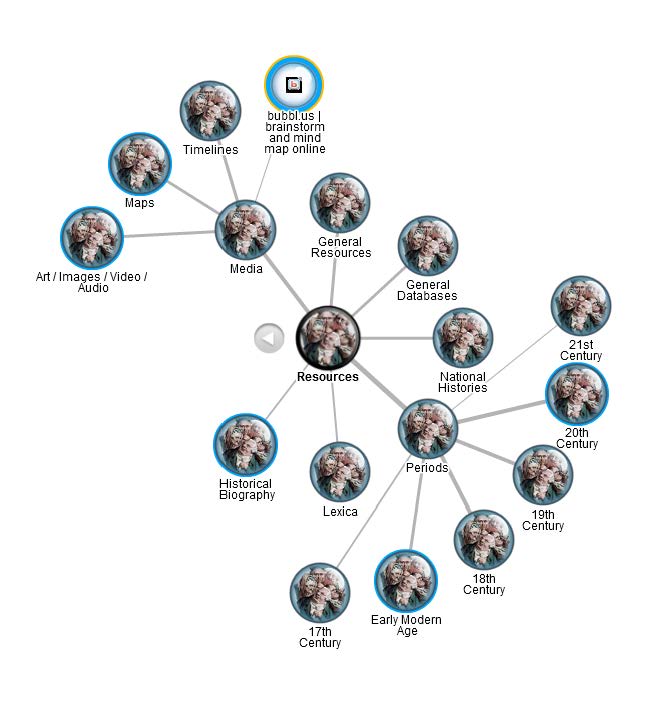
This summer semester I will be teaching one master seminar and an exercise course on the reading of French sources. As usual, I have assembled a ‘pearltree’ for each of these courses with weblinks to the specific themes.

A History of Time – Changing Cultures of Temporality (ca. 1750-1850)
(Pearltree – websites on this topic)

and

Politeness – Sources on the History of Manners in France (ca. 1700-1850)
(Pearltree – websites on this topic)

Since the general meeting of January 24th, I am officially an associated member of the Center for French Studies (Frankreichzentrum) of Freiburg University.

The Center was founded in 1989 as an autonomous interdisciplinary institution bundling the university’s  research and teaching with a focus on France. It offers master programs in  economics, journalism and intercultural studies and strives to intensify interdisciplinary cooperation between various fields – especially economics, law, French language, history and communication studies. Moreover, the center functions as a catalyst of German-French cultural exchange

.Image

On November 29th, I am invited to present my research project on the history of cultures of oral communication in the Research Colloquium of the ‘Research Center for Social and Economic History’ at Zürich University.

Venue:

18.15 – 19.45
Rämistrasse 64
8001 Zürich

For more information, click here. The colloquium’s complete program may be found here.

An article I wrote about the concept of the ‘spirit of the age’ in the long Eighteenth Century has been published in the volume Frühe Neue Zeiten, edited by Prof. Dr. Achim Landwehr.

Zeitgeist im langen 18. Jahrhundert. Dimensionen eines umstrittenen Begriffs, in: Achim Landwehr (Hg.): Frühe Neue Zeiten. Zeitwissen zwischen Reformation und Revolution (= Mainzer Historische Kulturwissenschaften 11), Bielefeld: transcript 2012, S. 319–355.

In my article, I trace the meanings and usages of the concept of zeitgeist in its various forms (esprit du siècle, Geist der Zeit, spirit of the age, etc.) across a number of contexts in France, England and the German lands. The concept is shown to be at the center of the temporalization of discourses about contemporary culture and its historical development during the Eighteenth Century. A special focus of the article lies on the complicated relation between the unstressed usages of the concept on the one hand and the explicit, metalinguistic discussion about it on the other. Because of its controversial and elusive nature, the concept of the spirit of the age was at the center of heated debates about its cognitive and metaphysical legitimacy and its pragmatic usefulness. How did such debates influence its use in other contexts?
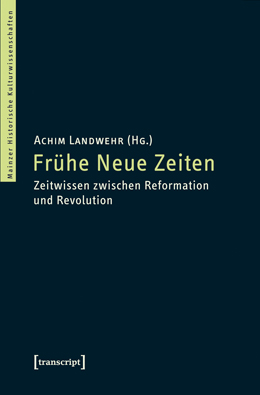
To read the Achim Landwehr’s introduction to the volume, click here.

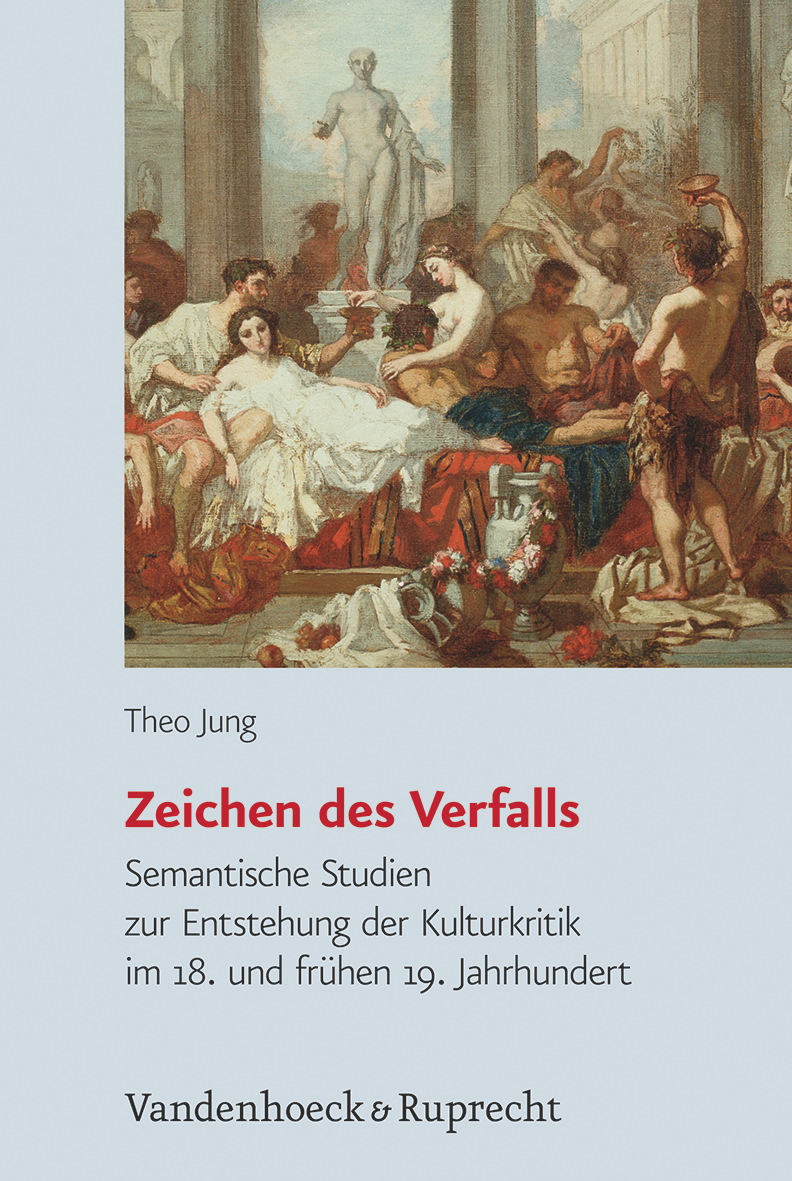
My dissertation has been published as volume 18 of the series ‘Historische Semantik‘ by Vandenhoeck and Ruprecht.

For more information, click here. For ordering from within Germany, click here.

As usual, this winter semester I’ll be teaching two courses:

Power and Morals: Britain in the Victorian Age

and

Bourdieu for Historians

Pearltree

Using the pearltrees web environment, I’ve started a systematic collection of links to websites of historical interest. Primarily, I aim to use these links as a teaching tool, providing useful background information to my various courses. Beyond this, I hope to provide students (and other people interested in various historical topics) with an accessible gateway into the digital side of historical research. The collection is dynamic and built to – using the input of colleagues and students – grow and ‘branch out’ over time.

It may be found here

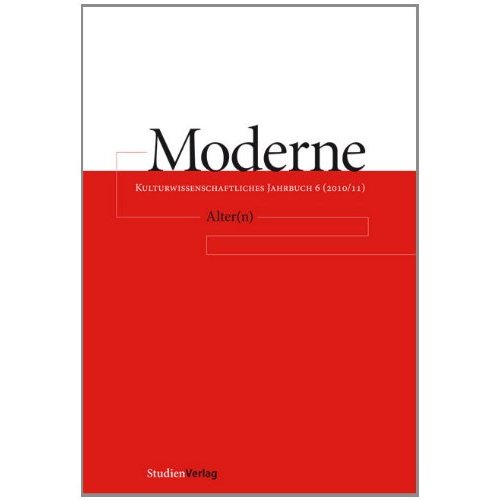
After a long publishing process, an article I wrote in 2010 has now been published in Moderne: Kulturwissenschaftliches Jahrbuch. In it, I survey the analytical strengths and weaknesses of Reinhart Koselleck’s theorem of temporalization for empirical research in the humanities. Considering it’s origins in modernization theory and giving it’s various critics due attention, I argue that the concept – in an updated, more pluralized form – may still be fruitfully applied in historiographical research.

The volume may be purchased here.

Last week, I presented a paper at the conference ‘The Changing Experience of Time in the Long Nineteenth Century: Local, Regional, (Trans)National and Global Perspectives‘, held at the Centre for Transnational History of the University of St. Andrews (Scotland). My presentation was concerned with different models of historical analysis of the changing experiences and practices of time, especially with the so-called model of ‘temporalization’ which has been primarily championed by the German historian Reinhart Koselleck. Its title was:

Modern Times: Temporalization as a Concept of Historical Analysis

Also, I’m happy to announce that next month, I’m presenting other research at a conference ‘Populäre Geschichte und medialer Wandel zwischen Fortschrittsoptimismus und Kulturpessimismus‘, organized by the DFG-research group ‘Historische Lebenswelten in populären Wissenskulturen der Gegenwart‘ (DFG-FOR 875). This time, my topic will be a narrative of cultural interpretation that was quite influential at the end of the 18th century, which interpreted history as a slow evolution from a ‘poetic’ to a ‘prosaic’ mode of existence. The title of my presentation will be:

Vom poetischen Ursprung zur prosaischen Gegenwart: ein kulturanalytisches Geschichtsnarrativ im späten 18. Jahrhundert
(From poetic origin to prosaic present: a historical narrative of cultural analysis at the end of the 18th century)

I’m honoured to announce that after the Fazit-Stiftung, now the Geschwister Boehringer Ingelheim Stiftung für Geisteswissenschaften has also generously awarded me a grant towards the printing costs of my dissertation, to be published this year under the title “Zeichen des Verfalls. Semantische Studien zur Entstehung der Kulturkritik im 18. und frühen 19. Jahrhundert”.